
The Ethiopian Agricultural Authority recently organized The 12th Annual National Seed Quality Control (NaSQC) Platform, from April 6-7, 2023. it was aimed at enhancing collaboration between regional and federal seed regulatory bodies. The event was opened by Ambassador Diriba Kuma, Director General of EAA, who spoke about the main objective of the forum, which is to make seed regulatory efforts more successful through easy information exchange. Ambassador Diriba highlighted the need for collaboration between regional and federal seed regulatory bodies in order to ensure that the regulations are effectively implemented across the country. He stressed that by working together, these bodies can share information and resources, which will ultimately lead to better outcomes for all stakeholders.
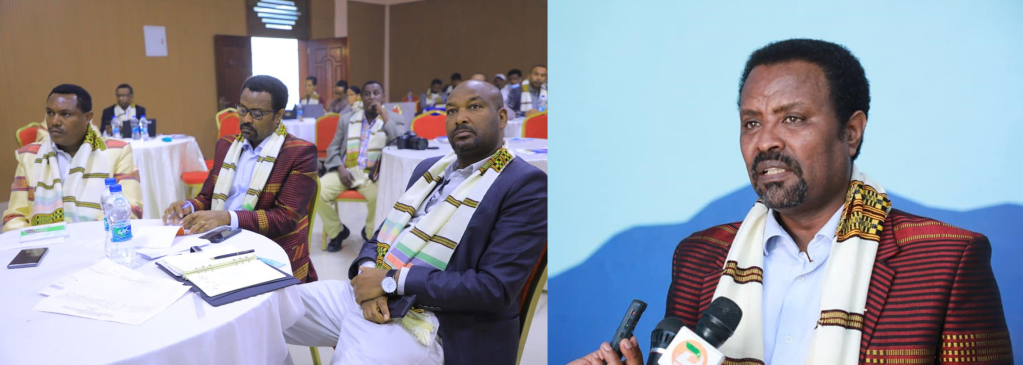
The 12th Annual National Seed Quality Control (NaSQC) Platform was organized by the Ethiopian Agricultural Authority (EAA) in collaboration ENSP and the Agricultural Transformation Institute (ATI). The meeting was attended by over 85 participants from various regions, including Amhara, Oromia, SNNP, Sidama, Beneshanguel Gumuz, Gambela, and South West regions. Representatives from EAA, ENSP, GIZ, and ATI also participated in the event.
During the meeting, the regional regulatory authorities of Oromia, Amhara, and SNNP presented their performance reports on the 11th round platform agreements and the status of seed certification in their respective regions. ENSP provided a review of the NaSQC process of past meetings, while EAA presented assessments of the regional regulatory authorities’ implementation performance of the 11th round agreements.
The federal and regional regulatory authorities signed agreements on six topics during the 12th NaSQC platform that need to be resolved or harmonized before the 13th annual meeting of the platform. These agreements include:
(i) Tagging – Regional regulatory bodies should not provide tags to seed producers before the seed lab test result. Basic facilities for barcode use are already available.
(ii) GPS use – Seed producer companies need to measure their seed farm using GPS, and the authority needs to check 10% of it.
(iii) Seed yield estimation method – For maize crops and self-pollinated crops, the use of MF and PET methods is recommended, respectively. For other crops, the regional regulatory authorities have the right to decide for themselves.
(iv) GOT station – Each regional regulatory authority is responsible for owning at least one GOT station registered under its name and allocating a budget to manage it.
(v) Seed health test – Most of the seed labs have adequate capacity to start seed health tests. Thus, all seed laboratories are required to practice seed health tests and present the evidence generated in the coming 13th annual platform.
(vi) Counterfeit seed/illegal seed trade – EAA is responsible for finalizing the draft directive for the control of illegal seed trade.
The NaSQC platform is an essential event that brings together federal and regional seed regulatory bodies to discuss issues related to seed quality control and certification. The agreements reached during this meeting will go a long way in ensuring that Ethiopia’s seed industry is well-regulated and that farmers have access to high-quality seeds. The EAA and its partners are committed to working together to ensure that the annual NaSQC platform continues to be a success and that Ethiopia’s seed industry thrives.

You must be logged in to post a comment.