

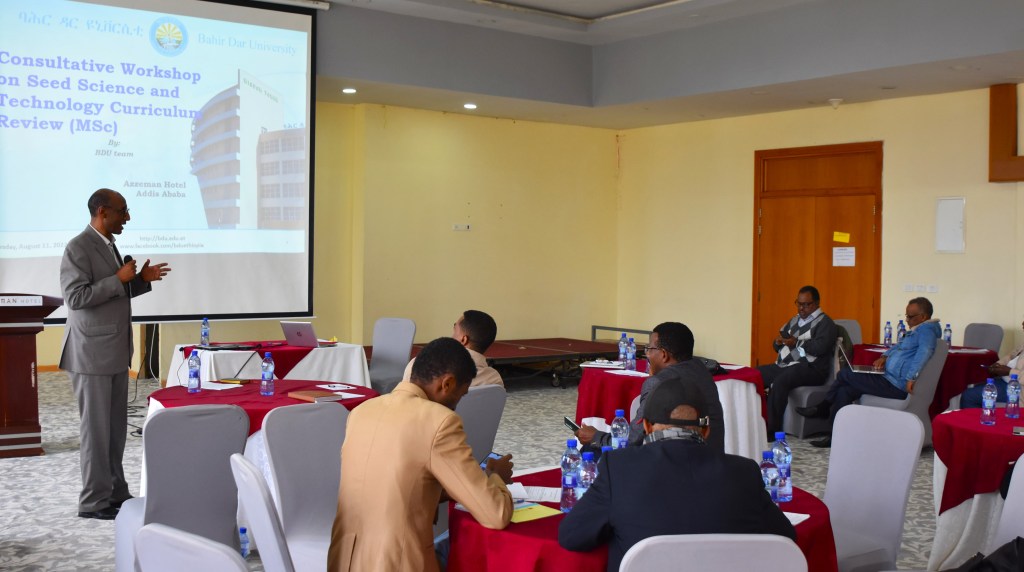
Ansha Nure is a skill and carrier development expert at Ethiopia Netherlands Seed Partnership project. As part of her responsibilities, she facilitated the process of revising the SST curriculum of Bahirdar and Haramaya Universities. In this article, we delve into her reflections on the review process, the key elements that were scrutinized, and the significant improvements that were implemented.
Can you describe the process of reviewing the MSc in Seed Science and Technology curriculum?
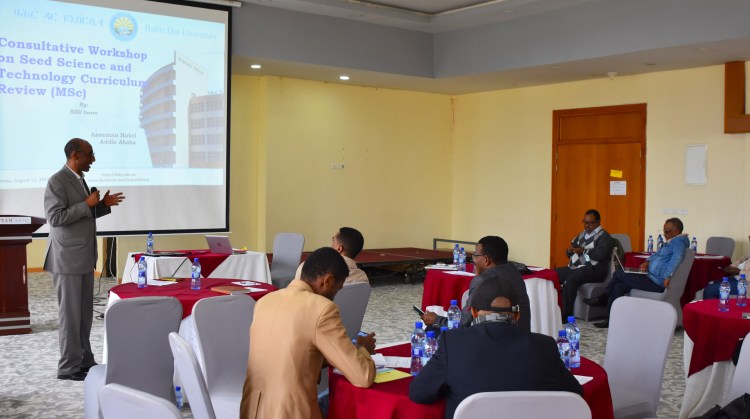
The process of the curriculum review is a response to the dynamic nature of the seed sector and the demand of the labour market. The ENSP project, in collaboration with Haramaya and Bahir Dar Universities, has initiated the curriculum review of Seed Science and Technology (SST) to enhance the quality and relevance of the existing curriculum. The consultation meeting with relevant stakeholders and professionals of the seed sector provided valuable feedback to assess the gaps and propose strategies to review the curriculum. The teams from Bahir Dar and Haramaya universities prepared a draft curriculum individually, incorporating feedback from the consultation workshop.
Tracer and need assessment studies were conducted to assess the perception of former graduates and employers. The draft curriculum was presented for the university communities during the internal curriculum review workshop, and a national curriculum review workshop was organized to get feedback from the wider community. The final curriculum is expected to be effective in the coming academic year (2023–24), after endorsement by the senates of the universities.


What were the major elements of the curriculum that were reviewed?
During the review process, the team thoroughly assessed the seed science and technology curriculum to ensure that it met the latest industry standards and best practices. The review focused on the major elements of the curriculum, including seed biology, genetics, seed business, and regulatory frameworks related to seed.
The review team also attempted to address the demands of the labor market in the seed sector by focusing on practical skills and balancing different aspects of seed science and technology, such as policy, governance, marketing, and quality. The curriculum was designed to equip students with practical skills that will enable them to thrive in the seed industry.
How was the feedback from stakeholders, alumni, and faculty incorporated into the curriculum review?
The universities have received detailed advice and feedback from alumni, stakeholders, and faculty members regarding the Seed Science and Technology curriculum. In addition, the curriculum reviewers, who possess extensive academic and professional experience, have provided significant input and guidance to enrich the curriculum further. The universities have taken into account the inputs from various sources and have endeavored to prepare a refined SST curriculum. The incorporation of these inputs is expected to enhance the quality of education in the field of SST and equip students with the necessary skills and knowledge to excel in their careers.
What improvements were made to the curriculum as a result of the review?
A visible and significant improvement has been made to the current curriculum of Seed Science and Technology as a result of the review. The revised curriculum has addressed the gaps in the old curriculum and is now market-responsive, catering to the demands of the industry. The curriculum now includes contemporary ideas, themes, and perceptions, which will widen the knowledge and skills of the graduates. The overall improvement in the curriculum will strengthen the seed system and focus more on practical skills. As part of the training, an internship will be integrated to provide students with hands-on experience. These changes will ensure that graduates are well-equipped to meet the demands of the industry and contribute to its growth. The revised curriculum is a step towards creating a more skilled workforce that can drive innovation and progress in the field of Seed Science and Technology.
How has the updated curriculum better prepared students for careers in seed science and technology?
The curriculum enhancement aims to improve the education system and equip graduates with the necessary knowledge and skills to enhance their competencies in various aspects of the seed industry. The revised curriculum is designed to broaden the trainees’ expertise and skills, with a particular focus on seed business management, seed policy, regulation, ethics, and internships.
Students undergoing the revised curriculum will gain access to the most relevant and up-to-date information about the seed business. The revised curriculum will provide graduates with opportunities to utilize the competencies acquired from the SST’s revised curriculum to boost their future careers.
The curriculum enhancement is a significant step towards strengthening the education system and ensuring that graduates are adequately equipped to face the challenges of the seed industry. The emphasis on the diverse aspects of seed will help graduates become successful professionals in the seed industry.
Were there any challenges faced during the curriculum review process? If so, how were they addressed?
During the curriculum review process, ENSP and the curriculum review committee faced several challenges that impeded progress. These challenges include the unavailability of committee members due to their busy schedules, political instability in some parts of the country, financial issues faced by universities, the replacement of committee members and coordinators, difficulties in transferring financial resources, and varying levels of progress between the two universities.
To overcome these challenges, ENSP and curriculum review committee took several measures. They provided regular follow-ups and encouragement to the committee members to keep them engaged in the review process. The timetable was revised to accommodate any delays caused by unforeseen circumstances. Different schedules were arranged for the two universities to ensure that there was uniformity in the progress made. New ideas and suggestions were welcomed from committee members to ensure that the review process was comprehensive and inclusive.
In some cases, university presidents were engaged to resolve financial transfer issues that were hindering progress. Additional funding was provided when necessary to ensure that the review process was not interrupted due to financial constraints. By taking these measures, ENSP and curriculum review committee demonstrated their commitment to ensuring that the curriculum review process advance in the right direction.
Can you discuss any new courses or areas of focus that were added to the curriculum after the review?
To revise the curriculum, several courses were modified, merged, or deleted, and new courses were added. The new courses introduced include seed production technology, seed health management, seed system and marketing, seed health and post-harvest handling, scientific writing and seminar presentation, resilient agriculture, ethics, seed business management, and seminars on specific thematic areas. It also includes new courses: Internship and Seed, Gender and Nutrition Security, and Seed System Handling (as an elective course). However, to make room for these new courses, Advanced Soil Fertility Management was omitted from the list of old curricula. The addition of new courses and the removal of outdated ones ensure that students receive a comprehensive education that is relevant to current industry needs.
What plans are in place to continue evaluating and improving the curriculum in the future?
The reviewed curriculum may not be able to fully meet the demands of the seed sector due to the limited number of courses and credit hours allotted for each course. In order to address these demands, short-term training will be designed and delivered to fill the professional gaps in SST. The short-term training will be designed to complement the existing curriculum and provide students with the skills and knowledge they need to succeed in their careers. ENSP promised to support the design and delivery of the short courses.
We anticipate that the revised curriculum will receive approval from both university senates, allowing the commencement of course delivery in the near future. It is important to note that curriculum review is a continuous effort that requires periodic evaluation and amendment. Therefore, the implementation and effectiveness of the reviewed curriculum will be periodically assessed to ensure that it keeps pace with the latest advancements in the sector.

You must be logged in to post a comment.