

Haramaya University, one of Ethiopia’s leading educational institutions, recently conducted a comprehensive review of its Seed Science and Technology (SST) curriculum. With the aim of aligning the program with the current needs of the Ethiopian seed sector, a stakeholder’s workshop was organized in Dire Dawa city. The workshop brought together experts, faculty members, and industry professionals to discuss and provide valuable insights for curriculum enhancement.
The curriculum review committee at Haramaya University diligently worked on evaluating and modifying the existing SST curriculum. They highlighted the various modifications, mergers, additions, and omissions made based on a tracer study and internal review conducted by the university. The committee’s primary focus was to ensure that the revised curriculum adequately prepares students for the evolving demands of the seed industry.
Haramaya University is committed to contributing to the development of the country through providing competent and equipped graduates. This was emphasized by Dr. Yeheyes, the delegate for Haramaya University president, during the opening of a workshop aimed at revising the university’s curriculum. As science and technology continue to evolve at a rapid pace, it is essential for educational institutions to periodically revise their curriculums to match the current status of these fields. “Haramaya University recognizes this need and has been revising its curriculums accordingly. The support from ENSP to revise the Science and Technology (SST) curriculum is highly appreciated by the university. The SST curriculum has been in place for fifteen years since its launch, and it is time for it to be updated to reflect the latest developments in the Ethiopian seed sector” said Dr. Yeheyes.
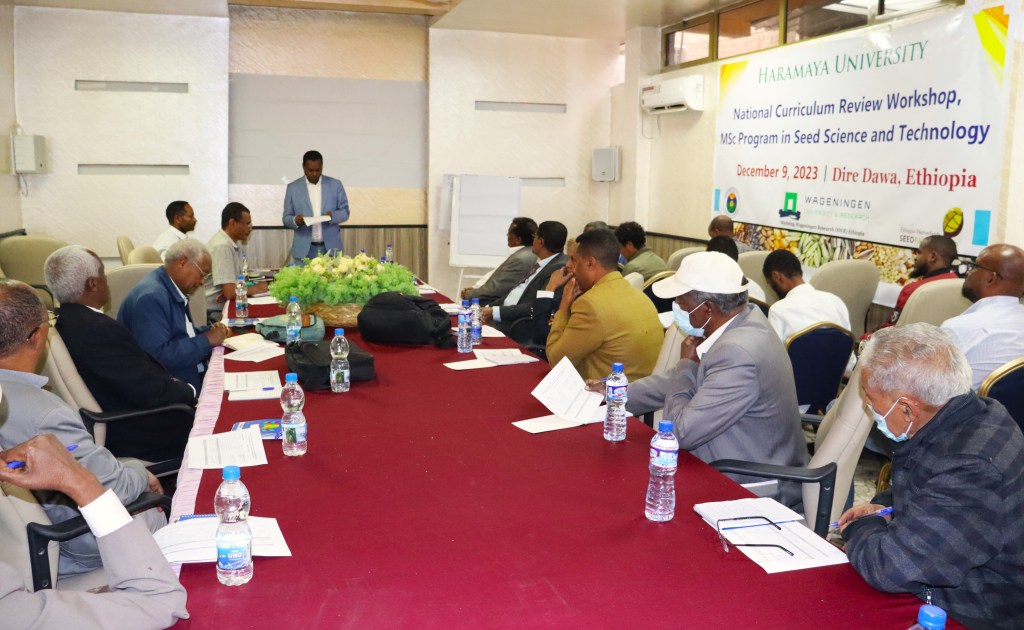
During the stakeholders’ workshop, the curriculum review committee presented their findings and the final product – a revised curriculum. The committee highlighted the courses that had been modified, merged, added, or omitted based on their extensive research. These modifications were made with the aim of meeting the demands of the evolving seed sector in Ethiopia.
External evaluators, renowned for their expertise in the field, were invited to provide their valuable feedback on the revised SST curriculum. They commended the efforts of the committee in addressing the industry’s requirements and acknowledged the relevance of the revised curriculum. While appreciating the overall changes, the evaluators also suggested certain improvements, including renaming specific courses and incorporating additional modules to meet the current demands of skilled manpower in the Ethiopian seed sector. Furthermore, the evaluators stressed the importance of including ICT and online platforms as an alternative to deliver courses.
The workshop participants actively engaged in discussions surrounding the revised curriculum and carefully considered the suggestions put forth by the external evaluators. One notable observation was the slight bias towards plant science courses in the revised curriculum. Participants stressed the importance of balancing this bias by emphasizing courses related to seed regulatory frameworks and seed business. They highlighted that these areas often face a shortage of skilled professionals, and a more comprehensive focus on them would better serve the industry’s needs.
The Ethiopian seed sector faces numerous challenges that require innovative solutions. Haramaya University recognized the need to equip its graduates with the knowledge and expertise to tackle these issues head-on. To ensure that the revised curriculum adequately addresses these challenges, a comprehensive evaluation process was undertaken by the curriculum review committee Additionally, valuable input from external evaluators and industry participants was sought, further enriching the curriculum’s content. Once approved by the university senate, this revised curriculum is expected to effectively bridge the academia-industry gaps and empower students with the skills needed to thrive in the seed sector.

You must be logged in to post a comment.