

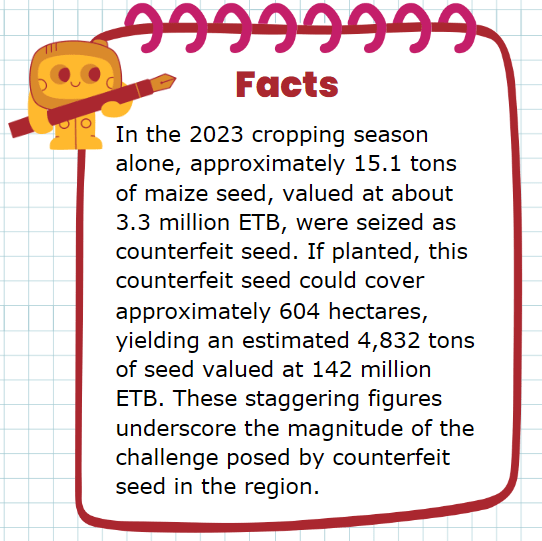
Seed counterfeiting is a major issue in Ethiopia, posing a significant threat to the agricultural industry. It has become a growing concern in the Amhara region, prompting the regional regulatory authority to take proactive measures in collaboration with the ENSP project. In recent years, the region has witnessed a surge in complaints about counterfeit seed, raising alarm bells for the regulatory authority. As a response to this pressing issue, the ENSP project has engaged in a strategic partnership with the regional regulatory authority to explore intervention areas.
One significant intervention has been the introduction of barcode use for seed certification to combat the proliferation of counterfeit seeds in the region. The Amhara region has witnessed a growing trade in counterfeit seeds, particularly hybrid maize and vegetable seeds. Reports from the regional regulatory authority have revealed an alarming increase in counterfeit seed trade, with the supply of fake seeds through imitation of other seed companies’ tags and bags, distribution of mixed seeds, and unauthorized trade posing common challenges for both the regulatory authority and farmers. This challenge is particularly pronounced for crops and varieties in high demand by farmers but not adequately supplied by seed companies.
To address this challenge, the Amhara regional regulatory authority, with support from the ENSP project, initiated discussions on the extent of counterfeit seed in the region since 2023. Hotspot areas where counterfeit seed trade is prevalent were identified, paving the way for targeted interventions. The introduction of barcodes for seed certification emerged as a pivotal strategy, with the regional regulatory authority embracing this approach as a pilot project in 2024 for selected crops.
In the process, 28 seed companies, both private and public, have transitioned from traditional tagging systems to barcode use for hybrid maize seed certification. A total of 994,347 barcodes have been printed and distributed to these companies, enabling the certification of 11,000 tons of hybrid maize seed.
This shift represents a significant system change, underscored by the commitment of the regional regulatory authority to invest in printing equipment and allocate budgetary resources to support this transition.

In June 2024, the regional regulatory authority conducted a stakeholders’ awareness raising and evaluation workshop on barcode system use for seed certification. The adoption of barcode use for seed certification has garnered positive feedback from stakeholders, including seed companies, who appreciate its role in preventing illegal trade and simplifying the labelling process. The enhanced information included in the barcode system, such as seed company details, lot numbers, certifying bodies, and crop-specific information, has proven instrumental in thwarting counterfeiters. Furthermore, the system’s ability to prevent misuse of barcodes for other crops and varieties has been lauded as a crucial safeguard against counterfeit practices.
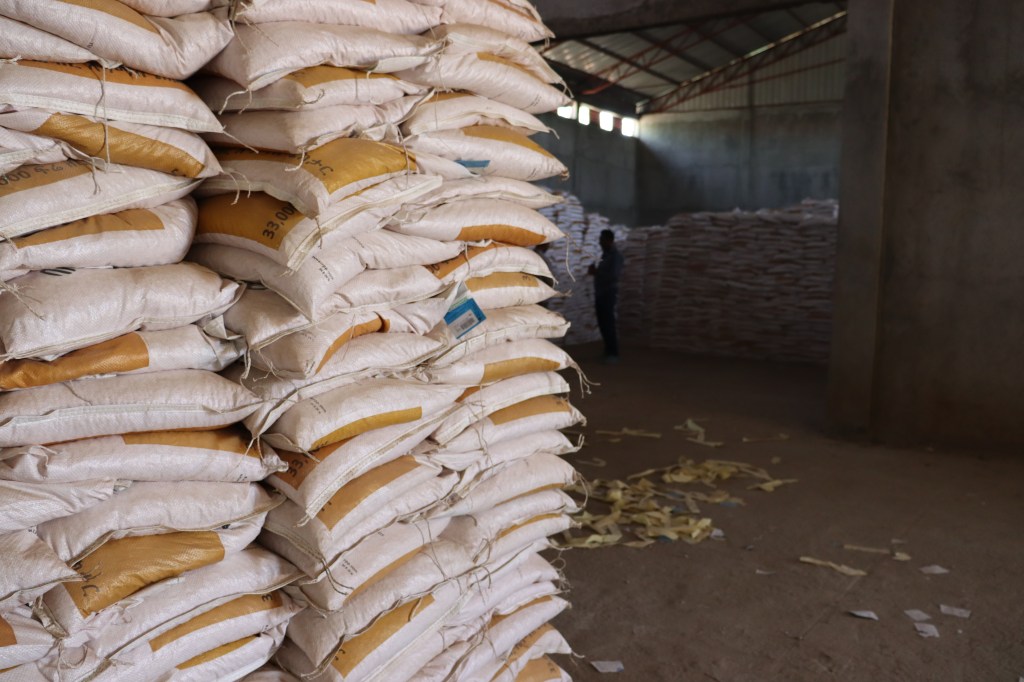
The regional regulatory authority has reported tangible benefits stemming from the barcode system, including a decline in calls from seed users and improved tracking mechanisms. Instances of counterfeit seed utilizing previous years’ tags have been detected, underscoring the efficacy of the new system in combating fraudulent practices. As a result of the new system, the authority reported a significant decrease in calls from seed users and successfully detained 98 tons of counterfeit seeds from other regions that had used tags from previous years.
In order to advance the use of barcode certification for seeds, several key steps need to be taken. Firstly, there is a need to develop a website and app to facilitate easy access to information for seed users. Additionally, establishing a free SMS line can provide another avenue for users to access information. It is also important to enhance the quality of tag printing paper and the information content for seed companies. Strengthening monitoring of the system will be crucial to ensuring its effectiveness. Awareness campaigns for seed users through various mechanisms should also be conducted to ensure widespread understanding of the benefits of barcode certification. Finally, assigning experts for tag printing and distribution activities can help streamline the process and ensure accuracy.
The efforts to tackle counterfeiting seed in the Amhara region serve as a valuable case study for addressing agricultural challenges through innovative solutions. By leveraging technology and collaborative partnerships, significant strides have been made in combating the counterfeit seed trade and safeguarding the interests of farmers and consumers alike.

You must be logged in to post a comment.