


In Africa, including Ethiopia, there is a lack of high-quality seed production and marketing data, which hinders countries’ plans for agricultural transformation and economic growth. The scarcity of information makes it challenging for the government to provide policy support and effective coordination. Currently, there is no consistent way of tracking seed sector performance in Ethiopia, including demand estimation, EGS supply, certified seed production, and seed distribution. Monitoring is conducted in a scattered manner at different scales for various reasons. This lack of comprehensive data complicates efforts to improve seed production and use for the country’s agricultural development.
Experiences from other countries show that the seed sector performance should measure all key components of the seed value chain (VC) rather than one segment of the VC. The Ethiopian seed sector functions mentioned in the document “Transforming the Seed Sector” are the structure in which different indicators are proposed for the sector performance monitoring. Experiences from other countries, including TASAI, seedSAT, and the Nigerian seed monitoring tool, were also used as a reference for seed sector performance monitoring tool development. The Ethiopian Seed Partnership (ESP) has facilitated and coordinated the SPiM tool development for the Ethiopian seed sector.
Monitoring of the Ethiopian seed sector would have many benefits as it gives an annual scorecard across the seed VC and performance; help to monitor the sector performance trends at national and regional levels; serve as input to identify key intervention areas for investments and policy makers; support the sector transformation and benefit smallholder farmers to access quality seed. The tool uses various indicators to measure the seed sector and aggregates data into an interactive dashboard that can bevisualizedby end users.
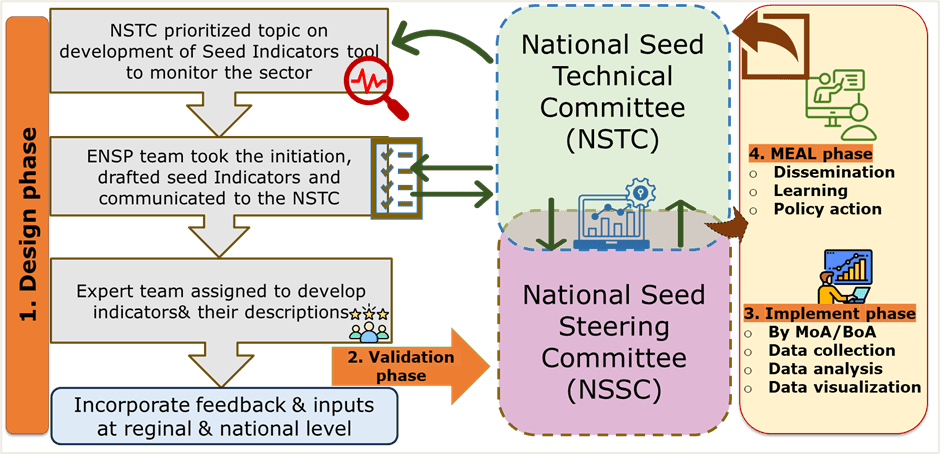
The overall flow of the seed sector monitoring tool development process and implementation plan is indicated in chart 1. The ESP staff and senior seed experts assigned by the National Seed Technical Committee have worked together and designed the tool. Key seed stakeholders at national and regional levels were also consulted in a one-day workshop organized. Inputs and feedback from the stakeholders are amended to finalize the tool. The next step is to validate the tool and facilitate its implication at national and regional levels.
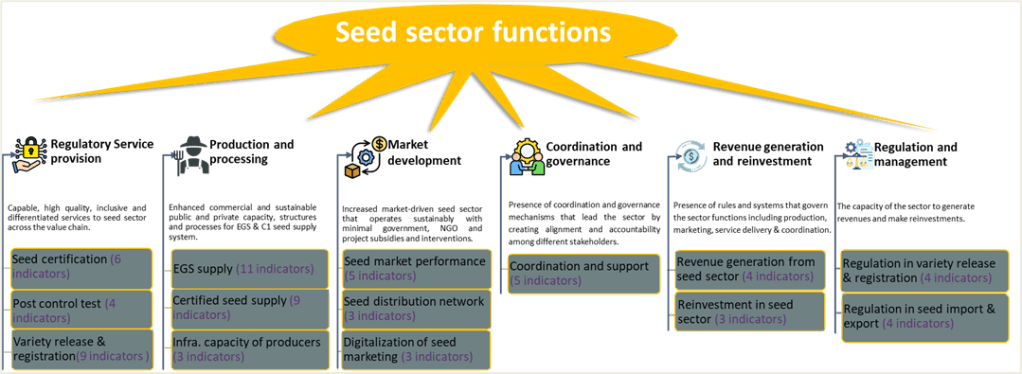
The Ethiopian seed sector transformation document published in 2019 by the MoA shows a seed sector that is more competitive, inclusive, transparent, responsive, innovative, resilient, and sustainable. The development of the SPiM tool is based on 66 indicators structured under four building blocks of the seed sector transformation document, each with different sub-functions.
- Regulatory service provision => with four sub-functions and 19 indicators
- Production and processing => with three sub-functions and 23 indicators
- Seed market development => with two sub-functions and 11 indicators and
- Coordination and governance => with one sub-function and 5 indicators
- Revenue generation and reinvestment => with two sub-functions and 7 indicators
- Regulation and management => with two sub-functions and 8 indicators
Information for each indicator is filled in a data sheet that cab be aggregated into a single data center. Different departments at MoA, EAA, regional BoAs, regulatory authorities and research institutes relevant to the date source will be responsible to fill the information.
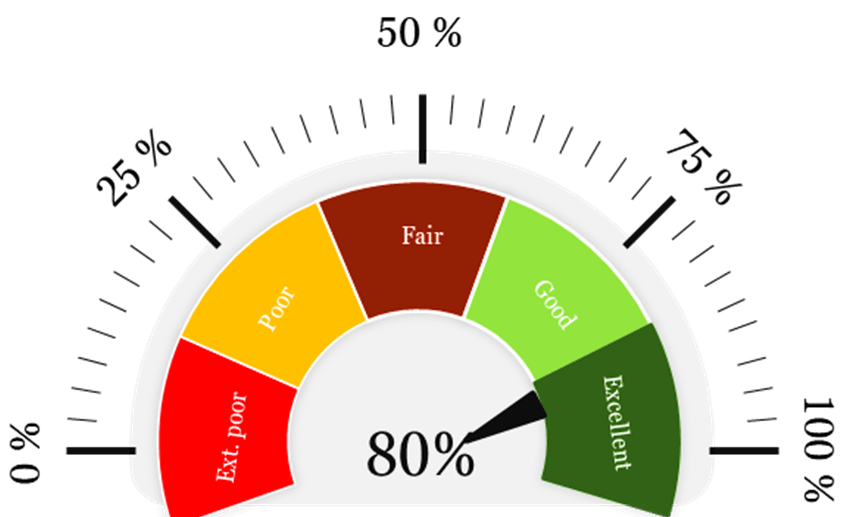
For several indicators the bulk of date collected from different sources is normalized and converted to quantitative scale of 0 to 100% for easy analysis and visualization. Four scales are used to measure the seed sector performance in this case: 0-19.99% (Extremely poor), 20-39.99% (Poor), 40-59.99% (Fair), 60-79.99% (Good) and 80-100% (Excellent). The output of the data analysis for each function or sub-function across the regions or nationally to visualize the performance of Ethiopia’s seed sector each year using an interactive dashboard.

You must be logged in to post a comment.