

In Ethiopia, where agriculture forms the backbone of rural livelihoods, seed insecurity has become a pressing challenge, particularly in regions affected by conflict, disasters, and climate-related shocks. Farmers in these areas face significant hurdles in accessing quality seeds of diverse crops and varieties, leaving them vulnerable to food insecurity and economic instability. Historically, emergency seed interventions have often been implemented hastily, with limited contextual understanding. This approach has frequently disrupted local seed markets and undermined the resilience of existing seed systems. To address these shortcomings, the Ethiopian Seed Partnership (ESP) has adopted a more strategic and context-sensitive approach to tackling seed insecurity. Mercy Corps Ethiopia is spearheading this effort, leveraging its expertise to create sustainable solutions that strengthen local seed systems and support farmers in rebuilding their livelihoods.
Mercy Corps Ethiopia has launched the Seed Insecurity Response Program in Tigray Regional State. This initiative, which also extends to the Afar and Somali regions, aims to foster sustainable seed systems while mitigating the unintended consequences of emergency seed aid on local markets.
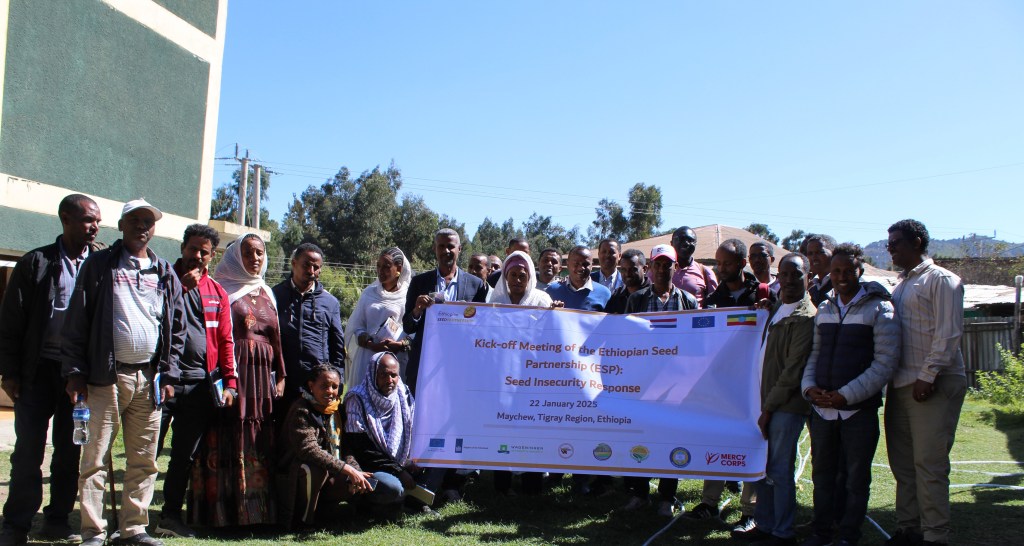
The official launch of the program took place in Maychew town on January 22, 2025, bringing together 42 key stakeholders, including government officials, private sector representatives, research institutions, regulatory bodies, financial institutions, and NGOs.
The meeting commenced with opening remarks by Mr. Mebrahtu Gebrehiwot, Director of the Regulatory and Protection Directorate at the Bureau of Agriculture and Natural Resources (BoANR). He underscored the critical importance of adopting a market-based approach to seed aid and highlighted the program’s potential to strengthen Ethiopia’s seed sector. Mr. Mebrahtu called for robust collaboration among stakeholders to ensure the program’s success.
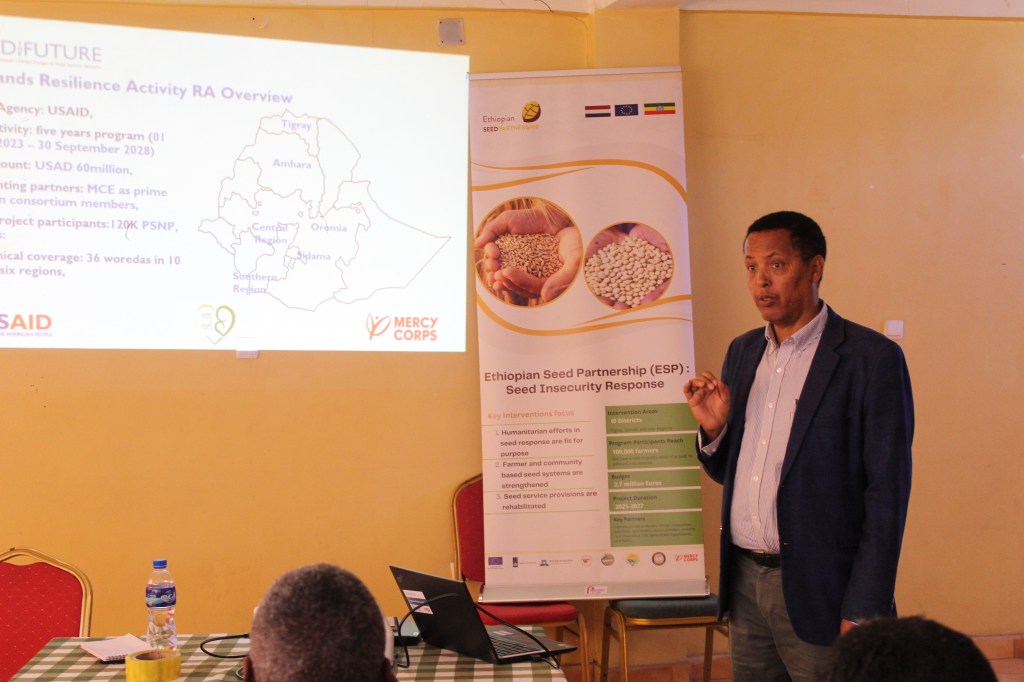
Mrs. Kebebush Embaye, a senior seed expert at Tigray BoANR, provided an insightful overview of the region’s seed systems, detailing both pre- and post-conflict conditions. She outlined opportunities for growth as well as challenges such as war-induced damage to infrastructure and unregulated seed aid distributions. Mrs. Kebebush emphasized the need for regulatory oversight and close collaboration with regional authorities to ensure sustainable outcomes.
Mr. Zerihun Abebe, Program Manager of ESP: Seed Insecurity Response, elaborated on the program’s core interventions. These include increasing seed availability, improving seed quality, and enhancing farmers’ access to improved seeds through resilient systems. He emphasized Mercy Corps’ commitment to adhering to the 10 guiding principles of seed aid—principles that prioritize sustainability, market system resilience, and local stakeholder engagement.
Adding to these perspectives, Mr. Kevin Mugenya, Director of Programs at Mercy Corps Ethiopia, shared the organization’s broader vision for fostering food security, economic recovery, water security, and peace across the country.
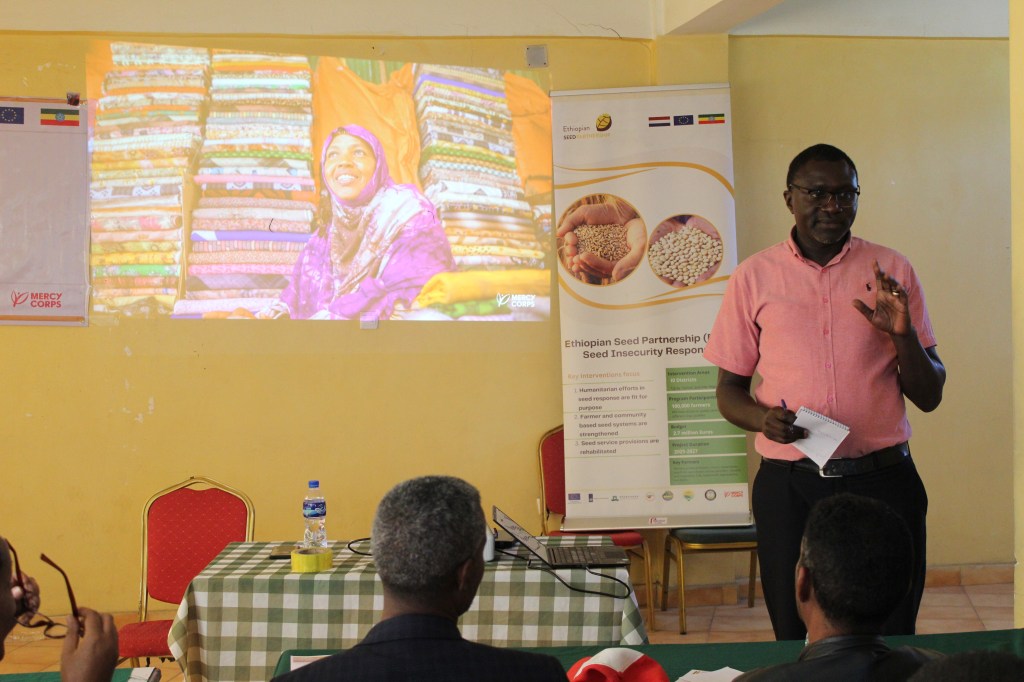
Following-up the presentations participants engaged in through discussions, during which participants discussed critical challenges such as weak contract farming law enforcement, limited private sector involvement, and the need for stronger regulatory frameworks for humanitarian seed aid. Stakeholders acknowledged the program’s importance and expressed their commitment to collaborating with Mercy Corps Ethiopia to achieve its objectives.
In his closing remarks, Mr. Mebrahtu reiterated the importance of adhering to the guiding principles of seed aid and integrating these principles into regional and local governance structures. He called on Mercy Corps Tigray to lead facilitation efforts while BoANR chairs the overall process. Mr. Mebrahtu assured participants of continued support from key stakeholders and emphasized the need for collective action to ensure the program’s success.
The Seed Insecurity Response Program represents a vital step toward rehabilitating Ethiopia’s agricultural sector in regions affected by conflict and disasters. The initiative will focus on key areas such as rehabilitating seed services, strengthening community-based seed production systems, and ensuring sustainable seed supplies in 10 selected woredas across Afar, Somali, and Tigray regions.
By addressing both immediate needs and long-term challenges, Mercy Corps Ethiopia is laying the groundwork for resilient agricultural systems that can withstand future shocks. The program not only aims to restore farmers’ access to quality seeds but also seeks to empower local communities through sustainable practices that enhance food security and economic stability.

You must be logged in to post a comment.