

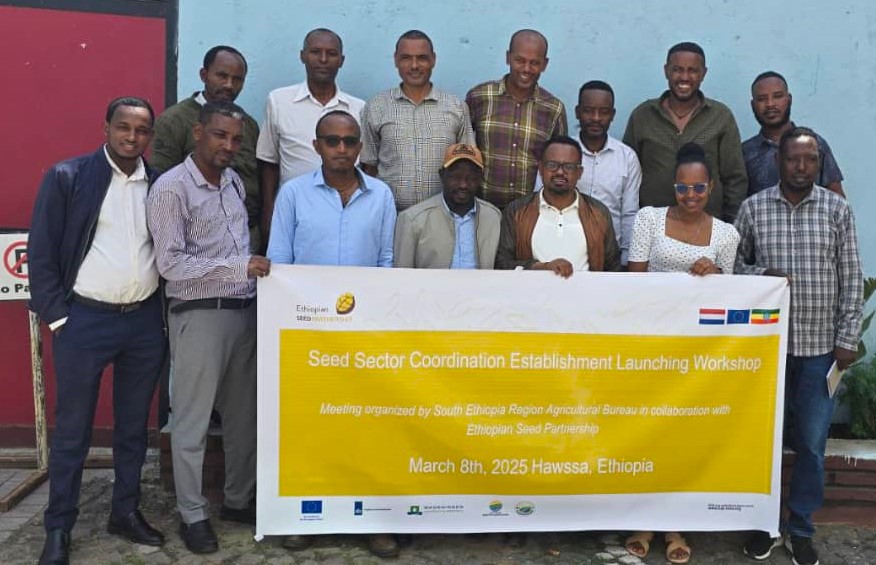
A workshop was conducted on 08th March 2025 in Hawassa town with the aim to facilitate the establishment of regional seed coordination committee in the South Ethiopia People Region. Participants from various organizations in the seed sector attended the workshops. The event aimed to establish a regional seed coordination committee, bringing together stakeholders from diverse organizations to address pressing challenges and map out a transformational pathway for the region’s seed sector.
In his opening remarks, Mr. Gidialk Alkime, the regional deputy head of the Bureau of Agriculture (BoA) for Agricultural Input and Rural Finance Supply Department, highlighted the status of the region seed sector. He emphasized that less than 25% of the region’s seed demand is currently satisfied by high-quality seeds—a glaring gap that hinders agricultural productivity and food security. This substantial disparity necessitates the engagement of key stakeholders involved in the seed value chain to participate in synchronized planning for the production and distribution of high-quality seeds. The seed coordinating committee could assume a pivotal role in facilitating the transformation of the seed sector of the region in a systematically organized manner, Gidialk remarked.

Dr. Mohammed Hassena, ESP project manager, presented an insight from the ISSD experiences in enhancing coordination within the seed sector and delineating prospective focal areas. He stressed the importance of identifying root causes of challenges and fostering synergistic collaborations among stakeholders. He concluded the presentation by emphasizing that regional BoA ought to prioritize the advancement of coordination and the development of strategic initiatives instead of merely engaging in the activities of other participants.
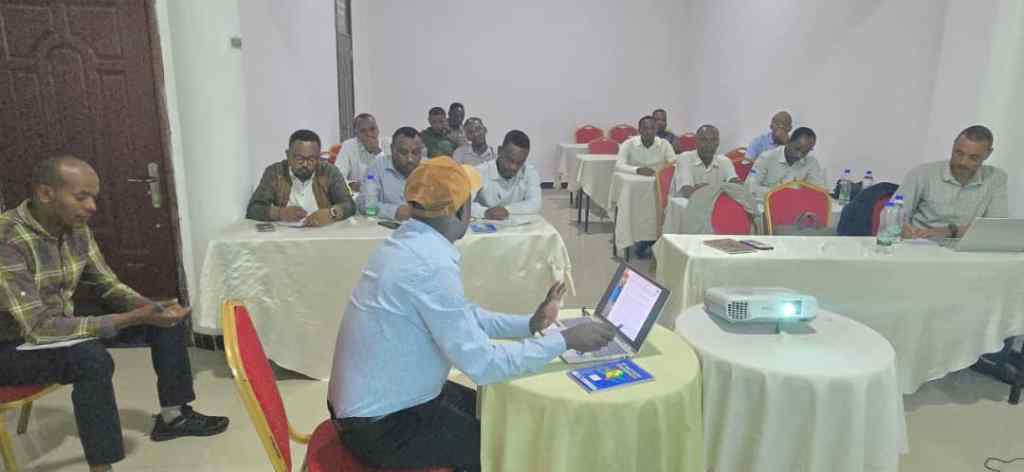
Key issues raised
The workshop provided an open forum for participants to articulate their concerns and propose solutions. Key issues discussed included:
Land shortages: private seed producers face limited access to land for expanding production.
Resource constraints: regional seed enterprises lack adequate financial and resource capabilities to fully engage in seed production activities.
Laboratory access: the absence of seed testing laboratories within the region forces reliance on facilities located elsewhere.
Stakeholder commitment: a lack of collaborative commitment among actors hinders progress.
Undefined roles: stakeholders lack clear and distinct roles in advancing the seed sector.
EGS shortages: insufficient Early Generation Seeds limit production capacity.
Varietal preferences: farmers’ preferences for seed varieties fluctuate over time, complicating planning.
Participants also raised concerns about the BoA’s involvement in seed demand collection and distribution processes, suggesting that its role should focus on coordination rather than operational tasks.
Establishing the coordination committee
A draft document outlining the structure, roles, and responsibilities of the proposed seed coordination committee was presented during the workshop. Participants recommended limiting committee membership to 7-8 primary stakeholders directly engaged in the seed sector to ensure efficiency and focus.
Next steps
The workshop concluded with remarks from Dr. Mohammed Hassena, who expressed gratitude to all participants for their active engagement. He emphasized that BoA must demonstrate commitment to coordinating the seed sector and supporting key actors within the value chain. Dr. Mohammed also highlighted ESP’s willingness to provide technical and financial support to address systemic challenges—provided the region takes proactive steps toward transformation.
As a next step, the workshop participants identified focus areas for the Seed Coordination Committee for the coming year and identified the roles and responsibilities of various actors in the seed value chain as summarized in the tables below. It was also highlighted that the roles and responsibilities of the stakeholders and committees need to be documented and communicated to enable effective follow-up and monitoring by the BoA in the regions.

You must be logged in to post a comment.