

The seed systems in seed-insecure regions of Ethiopia, such as Tigray, face significant challenges, often exacerbated by humanitarian seed aid that unintentionally disrupts local markets and systems. Recognizing this, Mercy Corps has spearheaded an initiative to develop the Seed and Seed System Response Guideline, a comprehensive framework aimed at fostering market-based seed interventions and strengthening seed system coordination in the region.
Why the guideline?
The Seed and Seed System Response Guideline is a strategic tool designed to improve seed system governance, ensure effective coordination, and promote market-based approaches to seed interventions. The initiative began with Mercy Corps proposing the concept and advocating for its adoption by key stakeholders. Recognizing the potential impact of this approach, the matter was referred to the regional seed coordination committee for further action. A team of experts was appointed to draft the guideline, which underwent rigorous reviews, consultations, and validation workshops involving diverse stakeholders. After incorporating valuable feedback, the finalized guideline received formal endorsement from the Tigray Regional Bureau of Agriculture during a workshop held in Mekelle in May 2025.
Addressing key challenges through socialization
To ensure effective implementation of the guidelines and address existing challenges in the seed system, Mercy Corps and regional seed coordination committee a socialization workshop. The workshop aimed to shift emergency seed aid interventions toward a sustainable, market-based approach. Participants—including humanitarian organizations like WFP, Helvetas, Care Ethiopia, and CRS—engaged in experience-sharing sessions and discussed ways to overcome critical issues such as:
The workshop concluded with a unanimous agreement to phase out emergency seed aid gradually in favour of a structured, market-based system that empowers farmers and small-scale seed traders.
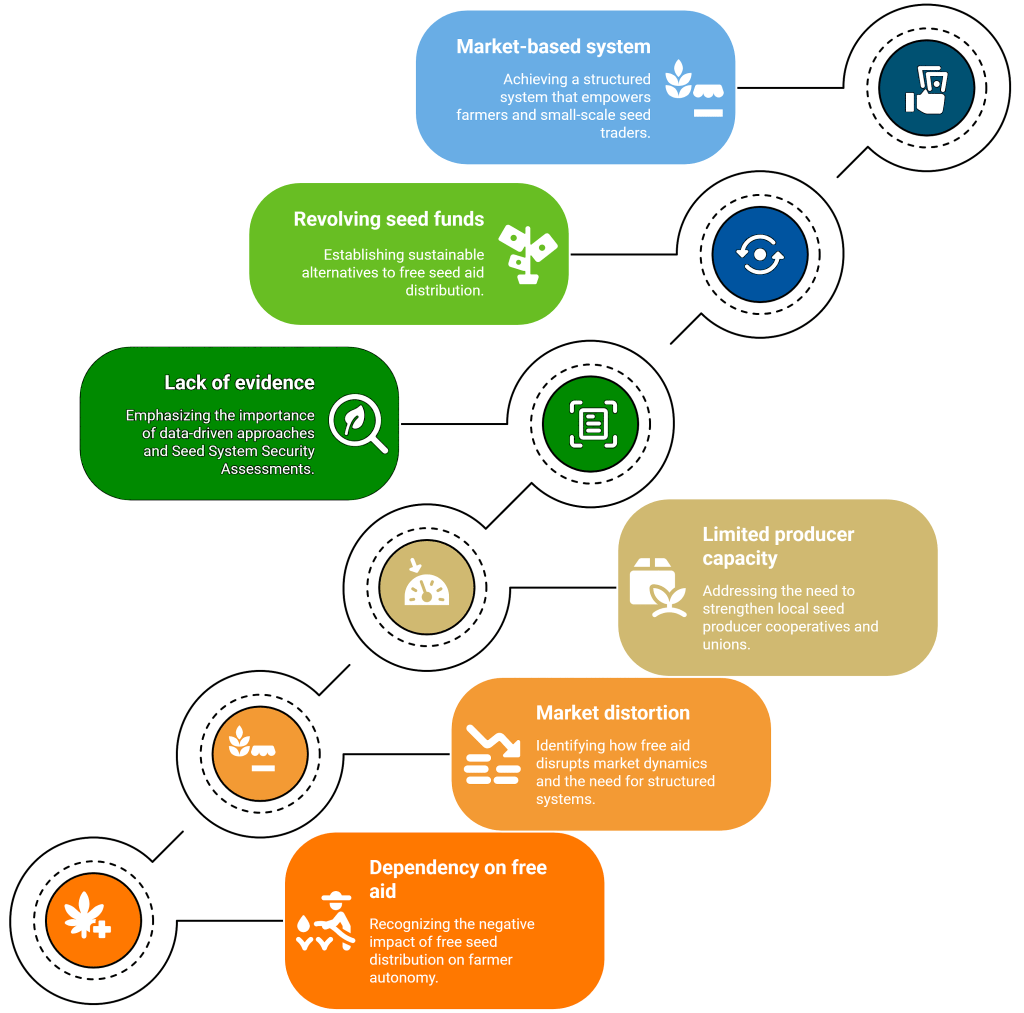
The workshop concluded with a unanimous agreement to phase out emergency seed aid gradually in favour of a structured, market-based system that empowers farmers and small-scale seed traders.
What is next?
Looking ahead, Mercy Corps aims to expand these efforts to other regions, including Afar and Somali, by adapting the endorsed guidelines to their unique contexts through a collaborative approach with ESP and regional seed coordination committees. This expansion will promote broader adoption of sustainable seed system practices across Ethiopia. Additionally, both parties plan to track annual progress and monitor results to assess the wider impact of these efforts, providing valuable evidence for further learning and improvement.
By adapting the guidelines to their unique regional contexts, these initiatives aim to promote sustainable seed system practices across Ethiopia. One-time plenary discussions have already been held in both regions, laying the groundwork for broader adoption and fostering resilient seed systems that benefit both humanitarian and development goals.

You must be logged in to post a comment.