
In an effort to organize the seed sectors of the Somali and Afar Regional States, two separate workshops were held in Jigjiga and Semera towns on May 14 and June 13, 2025, respectively. The primary objective of these workshops is to lay the foundation for coordination mechanisms among humanitarian, development, and peace (HDP) actors within the seed sector to address critical seed sector challenges and contribute to the establishment of the system.
In Jigjiga, Ahmednur Abdi from the Somali Regional State Bureau of Agriculture highlighted an urgent need for quality seeds, with less than 25% of demand currently met through the formal sector.
In Semera, Yasin Ali, Head of the Afar Regional State Bureau of Agriculture and Natural Resource Development, opened with an inspiring message about Afar’s evolving agricultural landscape. Once deemed unsuitable for farming, the region is now experiencing a surge in agricultural activity. However, Yasin acknowledged that access to high-quality seeds remained a significant hurdle. He expressed hope that the forthcoming Seed Coordination Committee would serve to enhance availability of quality seed within the region. In both regions Dr. Mohammed Hassena and Dr. Dandena Gelmesa from ESP once again led discussions, sharing insights from other regions while emphasizing the importance of adopting the HDP Nexus approach for its potential to canalize effective and sustainable solution to the seed system transformation. Moreover, Zerihun Abebe and Habtamu Diriba, representing Mercy Corps, brought forth a thought-provoking concept known as the Seed and Seed System Response guideline, specifically designed for implementation in Somali and Afar regions. This innovative guideline was proposed with the aim of customizing interventions to meet the distinctive needs of each region, drawing inspiration from the positive outcomes witnessed in Tigray.


Regional seed sector coordination focal persons Mr. Abdiwasa Ahmednour representing the Somali region and Habib from the Afar region presented the seed coordination Term of Reference (ToR), that outlines the specific roles and responsibilities of the committees and key stakeholders within the seed value chain. The identified actors include the Bureau of Agriculture (BoA), cooperative promotion agencies, research institutes, regulatory bodies, seed producers, as well as humanitarian and development partners. Both presenters emphasized, by setting clear expectations and defining the tasks of each entity involved, the ToR aims to streamline coordination efforts and enhance the efficiency of the seed sector.
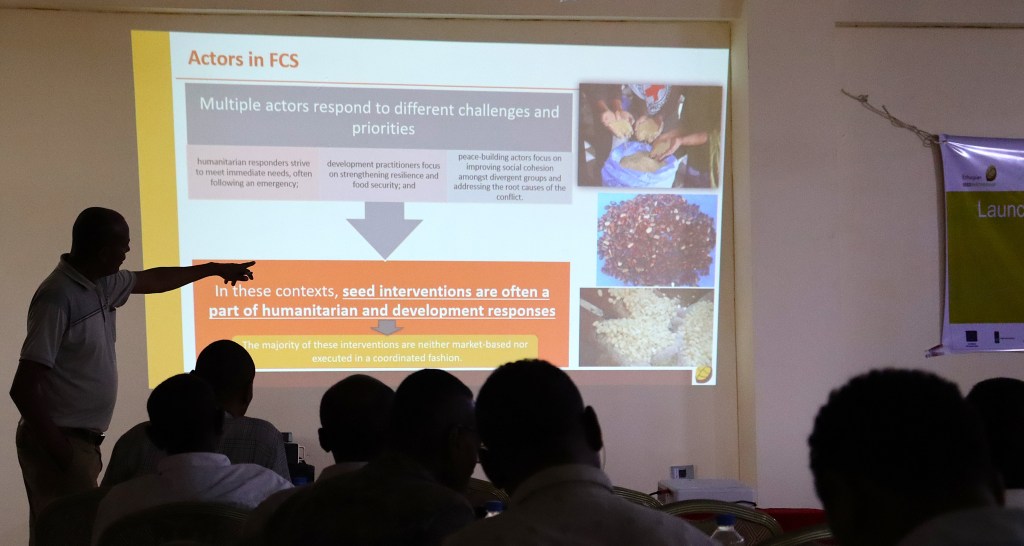
Discussions in Somali region pinpointing issues such as land availability, financial constraints, limited access of quality seed for farmers and lack of market-based seed and seed system interventions and weak coordination. Some of the key recommendations forwarded included the urgent need to establish and effectively implement regulatory frameworks aimed at addressing the prevalent issue of poor seed quality in the region, aligning regional seed strategies with national policies, and strengthening coordination among seed actors toward market-oriented seed system development in the region. Participants in Semera echoed concerns heard in Jigjiga: lack of basic facilities like seed cleaning machines and laboratories, logistical challenges in transporting seeds for quality testing, and reliance on donor-supplied seed varieties unsuitable for local conditions. Dr. Mohammed Hassena reassured attendees that ESP would provide basic lab equipment and training to address these issues, and he suggested the committee priority should be advocating for regional government investment in the seed sector.
Similarly, at the end of the Semera workshop, priority areas for the committee were suggested. Of the priorities suggested includes developing roadmap for achieving EGS self-sufficiency, and establishment of a centralized database for seed-related information. Ahmed Amon from Afar’s Bureau of Agriculture pledged full support for these efforts, while Hadjie Abdu Hassen of Afar Seed Enterprise commended the workshop as a critical step toward harmonizing stakeholder efforts.
Both workshops—were more than just meetings; they served as crucial milestones in the ongoing initiative to transform the seed system in these regions into one that is both market-driven and sustainable. They brought together diverse stakeholders—regional agricultural bureaus, research institutes, cooperative agencies, humanitarian organizations like FAO, Mercy Corps, WFP, GIZ, OWDA, IRC, and others—all united by a shared vision: to respond to seed sector insecurity by working together under HDP nexus through collaboration and unwavering commitment.

You must be logged in to post a comment.