
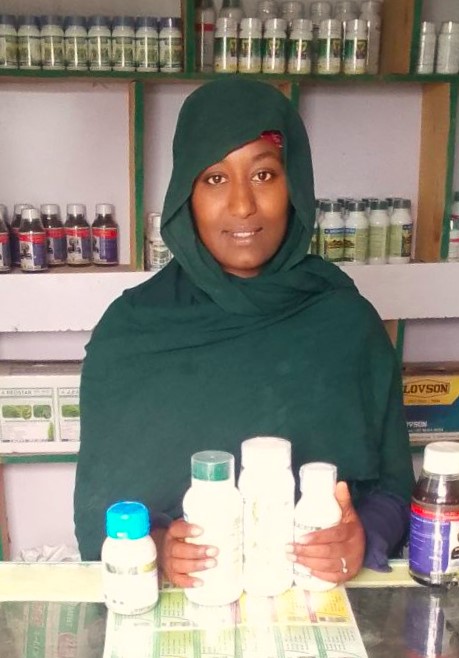
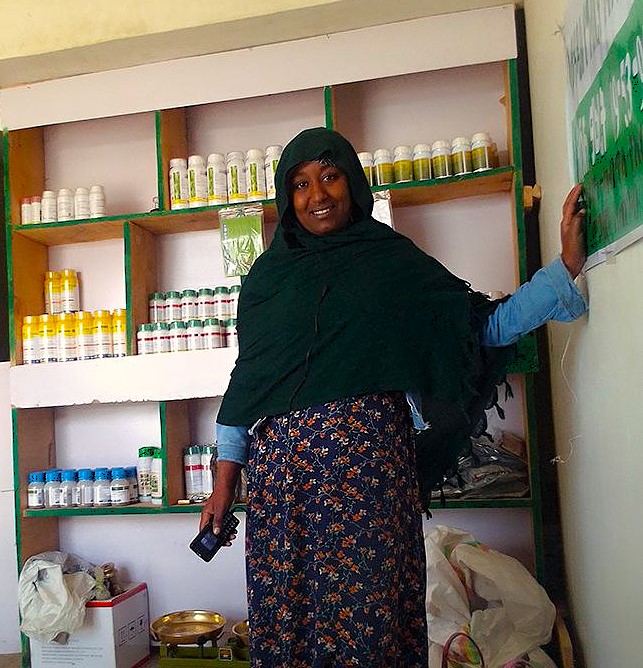
In this column of our newsletter, we highlight the incredible journey of Aynadiss Kifle, a determined young professional who turned her passion for horticulture into a thriving seed and agro-input business. Aynadiss’ story is a testament to the power of hard work, persistence, and the opportunities provided by programs like the internship program of ESP.
ESP: Could you share a little about your background?
Aynadiss: Certainly. My name is Aynadis Kifle, my residence is Amhara Region, Northern Shewa and I graduated in the field of Horticulture from Debre Markos University.
ESP: When did you become part of the ESP internship program?
Aynadiss: I joined the ESP internship program which lasted for six months in 2023 (the first round of the internship program).
ESP: What path did your career take after completing the internship?
Aynadiss: After the internship program, I was hired by the same company for six months around Mojjo. Then I had a chance to be employed in a private seed company in Addis Ababa. However, the salary wasn’t sufficient to sustain life in Addis Ababa, so I decided to start my own business around my birthplace. Now I am the owner and manager of Aynadiss Agricultural Input Supply Store.
ESP: How did the ESP internship program helped you in starting your business?
Aynadis: The program was instrumental. It provided me with knowledge about the Ethiopian seed sector, introduced me practically to the type of varieties highly demanded, and taught me about seed marketing, promotion techniques, and customer handling. It laid the foundation for my seed and agro-input business, because the soft skill training on personal development, business management and entrepreneurship trainings gave me the right personality and motivation to start my own business.

ESP: What challenges did you face when starting your business?
Aynadis: The biggest challenge was financial. I had the business idea but lacked the start-up capital. I convinced my family, who helped secure a 100,000 ETB credit from Tsedey Bank/Micro-Finance, using their certificate of farmland ownership as collateral.
ESP: How did you convince your family to support your business idea?
Aynadis: I explained that my salary in Addis wasn’t enough and shared the knowledge I gained from the internship program about the seed business, its demand, and the profitability. I also emphasized that staying employed wouldn’t lead to growth. My family realized my determination and they decided to support me.
ESP: How did your business perform initially?
Aynadis: I was able to start the business as small-scale business, but it performed much better than I expected. There was significant demand for seed and agro inputs in my area. Within six months, I paid off my initial loan and later borrowed an additional 500,000 ETB, which I also repaid within a year.
ESP: What do you think contributed most to your success?
Aynadis: The training and the exposure I had in the entire internship program, the hard work sentiment and excellent customer handling were crucial. Moreover, I ensured to customers that the different items I supply, or sell are genuine products and provide advisory services for free, this has helped me build trust and loyalty.
ESP: What advice would you give to other young professionals?
Aynadis: I encourage young professionals to change their mindset about agriculture. It is rewarding but requires dedication and hard work. If they lack start-up capital, they should look for other alternatives and start small. They have to also hunt opportunities, which enhance their professional skills such as ESP’ internship program. The ESP project doesn’t provide financial aid but equips young professional with knowledge and skills, and crates linkage with potential employers.
ESP: What challenges do young professionals face in entering the seed sector?
Aynadis: Access to finance is a major challenge, especially it is difficult to get loan without collateral. Many young entrepreneurs struggle with this issue, as I did initially.
ESP: What should stakeholders in the seed sector do to support young professionals?
Aynadis: Stakeholders should encourage young professionals to join the seed industry by providing support and opportunities. Banks and micro-finance institutions should include youth-focused credit portfolios to help start-ups in this sector. ESP project should also continue its effort of training and arranging placement for interns, so that more young professionals will get better job opportunity.
ESP: What are your thoughts on the ESP internship program?
Aynadis: ESP has done an excellent job. Without it, I doubt I would have started my business. I’m very grateful and encourage ESP to continue its efforts, including organizing training on new topics and refresher courses for internship graduates.
ESP: what is your future plan
Aynadis: I am planning to expand my business, already started the process to open my branch at Debrebirhan town. I am also planning to create opportunities for young professionals like me.
ESP: thank you for your time and sharing your experience.
We believe Aynadiss Kefle’s journey from an unemployed graduate to a successful entrepreneur is an inspiring story of resilience and determination. Her experience highlights the importance of programs like the ESP internship program in equipping young professionals with the skills, motivation and confidence needed to engage in and succeed in the seed sector.

You must be logged in to post a comment.