
As part of the Ethiopian Seed Partnership (ESP), RESILIENCE BV Ethiopia, is actively enhancing the chickpea and grass pea value chains, which are important for ensuring food and nutrition security. These efforts align with ESP’s primary outcome area, which emphasizes strengthening the private seed sector. Recent developments in these value chains include stakeholder engagement and developing comprehensive business cases.
As part of the Ethiopian Seed Partnership (ESP), RESILIENCE BV Ethiopia, is actively enhancing the chickpea and grass pea value chains, which are important for ensuring food and nutrition security. These efforts align with ESP’s primary outcome area, which emphasizes strengthening the private seed sector. Recent developments in these value chains include stakeholder engagement and developing comprehensive business cases.
Strengthening the chickpea value chain
For many Ethiopians, chickpea is more than a crop, it is a part of our daily meals and cultural identity. From Shiro to Kolo, chickpea has long been a staple on the Ethiopian plate. Beyond this, chickpea is also a vital cash crop for thousands of smallholder farmers and a powerhouse of nutrition, rich in protein and essential micronutrients like zinc and iron, yet the adoption of high yielding, disease-resistant varieties remains limited among the value chain actors.
Recognizing this challenge, Resilience, on behalf of the Ethiopian Seed Partnership (ESP), organized a half-day consultative workshop in Addis Ababa to explore opportunities to strengthen the chickpea value chain. The workshop brought together a wide range of actors, from seed companies, farmers, processors, and researchers, to seven potential off takers, creating a rare space for open dialogue across the value chain.

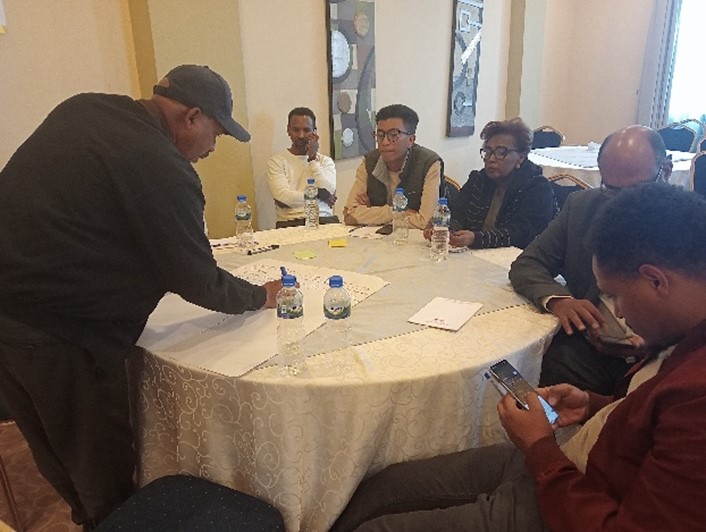
The workshop discussions focused on five priority areas essential to strengthening the chickpea value chain. Participants looked at factors that influence variety selection for farmers, seed companies, and off takers, and compared the advantages and challenges of sourcing directly from farmers versus working through traders. They also discussed the barriers hindering the adoption and promotion of improved varieties, while emphasizing the need for credible data and demonstrations to build confidence among both producers and buyers. The conversations concluded with identifying opportunities for collaboration, highlighting how coordinated efforts across the value chain can generate shared benefits for all actors.
Key insights from stakeholders
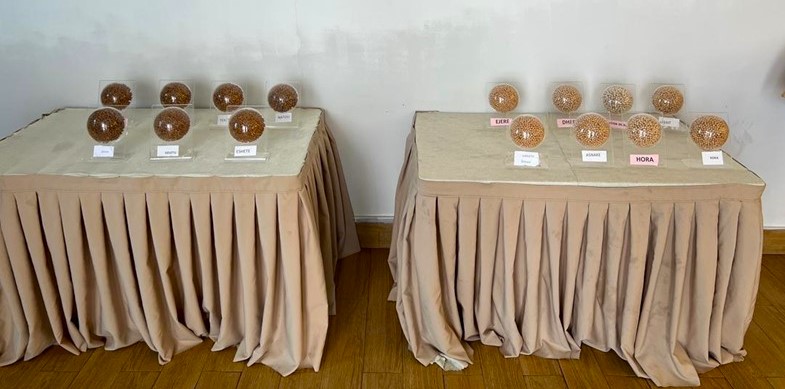
The workshop generated several important insights for advancing the chickpea value chain. Farmers emphasized that “seeing is believing”, highlighting the value of demonstration plots in showing yield potential, disease resistance, and taste qualities of improved varieties, which in turn encourages adoption. Off takers stressed the need for consistency and taste assurance, explaining that they require clear evidence of quality before committing to new varieties. Participants also pointed to the nucleus farmer out grower model as a sustainable pathway for the value chain. Finally, there was broad agreement on the importance of stronger connections across the value chain, with closer relationships among seed producers, farmers, and off takers seen as essential for reducing risks and fostering greater investment in improved varieties.
Next Steps
Building on the momentum of the workshop, ESP is moving forward with clear next steps. Variety trials will be carried out with seed companies to generate solid evidence on performance of the released varieties, while nucleus farmer out grower models will be set up to create practical pathways for wider adoption. At the same time, consumer testing with selected off takers will help build confidence in both taste and quality. Together, these actions aim to strengthen collaboration across the value chain, build trust among stakeholders, and speed up the use of improved chickpea varieties. More than just introducing new varieties, this effort is about creating stronger markets and ensuring that a crop so central to Ethiopian culture continues to support farmer resilience and improve household nutrition.
Grass pea Business Case Workshop
Grass pea is a legume with enormous potential as a nutritious, low-input, regenerative and climate-smart crop, but it remains underutilized primarily due to the presence of the toxin Β-ODAP which causes neurolathyrism (paralysis of the lower limbs). Recent advances in bioscience, however, have produced new low-toxin varieties, as well as those containing the traits most desired by farmers, such as higher yields and improved pest and disease resistance.
These varieties hold particular importance for Ethiopian farmers, among whom grass pea cultivation is increasing. Yet, Ethiopian farmers still rely on varieties which pose toxicity risks, due to a combination of factors affecting the availability of and access to improved seed. The objective of ESP, in collaboration with the University of East Anglia (UEA) and the Norwich Institute of Sustainable Development (NISD) is to understand how to ensure widespread, rapid and ongoing access to improved grass pea seed across Ethiopia’s rural areas.
NISD and UEA have therefore recently released a report “the business case for grass pea in Ethiopia”, outlining an action plan for the scale-up and use of low-ODAP grass pea across Ethiopia to complement nutritious and resilient climate smart agriculture. This report, and the three approaches for the expansion of improved grass pea use in Ethiopia it describes, was validated during an online stakeholder workshop on August 5th.
During the workshop, a variety of stakeholders active in Ethiopia’s seed system was present, ranging from public to private sector and civil society. Stakeholders agreed that the “integrated seed systems approach”, with distribution of improved grass pea through local seed businesses, is the most viable approach proposed.
As follow-up to the workshop, NISD and UEA are now starting a pilot with Bishoftu Agricultural Research Centre for multiplication of good-quality breeder seed of low β-ODAP grass pea variety Wasie for large scale demonstration and commercial seed production. Stakeholders in the grass pea seed sector interested to participate in this pilot, are welcome to reach out to Resilience.

You must be logged in to post a comment.