
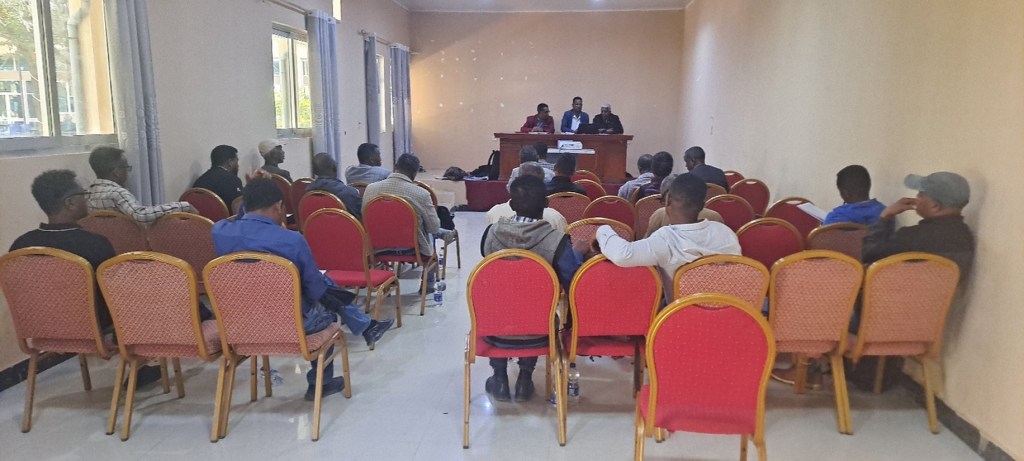
Recognizing the critical importance of sustainable seed systems in fragile contexts, a consultative and joint planning meeting was held on 30–31 December 2025 in Wukro town, Tigray region. The event brought together key humanitarian and development (HD) actors to discuss, jointly plan market-based seed response in the region.
The meeting convened 37 participants representing government institutions, humanitarian organizations, seed producers, and development partners. Notable attendees included Alembrhan Harifeyo, Head of the Bureau of Agriculture and Natural Resources (BoARNR), who opened the meeting with a reaffirmation of the government’s commitment to supporting local seed systems. The diverse group of participants included representatives from organizations such as FAO, CRS, CARE Ethiopia, Mercy Corps Ethiopia, World Vision Ethiopia, Feed the Future, Tigray Seed Enterprise, and the Tigray Cooperative Marketing Agency.
Aligning efforts for a sustainable seed system response
The primary objective of this meeting was to create a common platform for aligning humanitarian and development efforts on a harmonized seed system response. The discussions centred on enhancing the effectiveness, coordination, and sustainability of seed interventions in Tigray’s fragile areas. Four key papers were presented during the meeting:
- Awareness creation on market system development approaches
- Key findings and recommendations from the seed system security assessment (sssa) conducted by mercy corps Ethiopia
- Progress in regional seed supply and emergency response for 2024/2025
- Proposed joint plan for 2026, integrating local seed supply by core producers and emergency response plans from humanitarian organizations
These presentations sparked dialogue among participants. While some humanitarian actors raised concerns about aligning market-based seed responses with their organizational policies, there was widespread recognition of the need to prioritize smallholder farmers’ sustainability and resilience. Participants acknowledged that continued reliance on non-local seed procurement and free seed distribution undermines local markets and long-term recovery efforts.
Addressing challenges and building solutions
Key challenges were identified during the discussions, including:
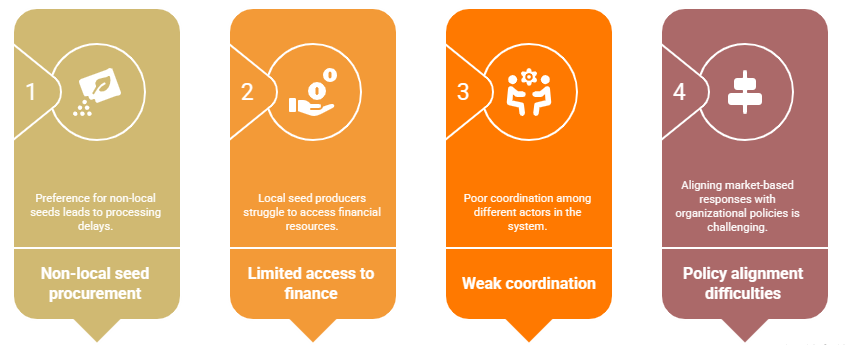
Despite these challenges, the meeting marked a significant step forward. A shared commitment emerged to strengthen and enforce the Tigray Seed and Seed System Response Guideline, which advocates for market-based seed responses. Alembrhan Harifeyo reiterated the government’s leadership role in coordinating actors, supporting local seed markets, ensuring regulatory compliance, and guiding evidence-based emergency responses.
The meeting also highlighted innovative practices already underway. Implementing partners such as Helvetas Ethiopia and ATI showcased their use of revolving seed distribution models. This approach reduces farmers’ dependency on repeated free seed aid while promoting self-reliance and sustainability. Such models exemplify how practical applications of the Tigray Seed and Seed System Response Guideline can contribute to building resilient local seed systems.
A clear path forward
By the conclusion of the workshop, participants had developed joint planning templates and agreed upon clear action points to improve coordination under the leadership of BoARNR. This collaborative effort aims to institutionalize humanitarian-development collaboration in Tigray’s seed system response.
The outcomes of this meeting represent an important step toward a more coordinated, coherent, and resilient approach to addressing seed system challenges in Tigray. By aligning emergency assistance with local market capacities and long-term food security goals, this initiative offers hope for a sustainable future for smallholder farmers in the region.

You must be logged in to post a comment.