
Ethiopia’s agricultural sector stands as a cornerstone of the country’s economy, and the seed sector plays a pivotal role in ensuring food security and improved agricultural productivity. However, the seed market in Ethiopia faces numerous challenges, particularly with issues related to carry-over seed. In 2025, the National Seed Technical Committee (NSTC) identified this issue as a key concern, prompting studies by teams from the Ethiopian Institute of Agricultural Research (EIAR), Ministry of Agriculture (MoA), and Ethiopia Seed Partnership (ESP) across four regions namely Amhara, Central Ethiopia, Oromia, and Sidama. Findings revealed that over 41,275 tons of seed, or 25% of the total supply, remained unsold, with public seed enterprises accounting for 95% of the carry-over. Major contributing crops were maize, wheat, and teff, contributing about 62%, 28% and 9%, respectively, of unsold for these crops. Key causes included inflated demand forecasts, inefficient marketing systems, government interference, illegal seed trade, poor information sharing, and inadequate variety promotion and regulatory capacity. The involvement of government actors in quota-based seed allocation exacerbates the issue, restricting producers’ marketing efforts and creating mismatches between supply and demand. This situation undermines broader economic goals by discouraging investment in the seed sector and hindering the government’s objective to promote certified seeds of improved crop varieties for enhanced agricultural productivity; a key reason behind the establishment of NSSC and NSTC.
Proposed solutions: Direct Seed Marketing (DSM)
To address these challenges, the study proposed several strategies, with a primary focus on reducing reliance on quota-based seed allocation systems and promoting. DSM is a market-driven approach that aligns supply with demand by enabling companies to sell seeds to farmers directly or through their own market channels. Given the serious nature of the problem that came out from the assessment, the ministry also validated the proposed solutions of the assessment findings for actionable solutions.
National consultative workshop on DSM
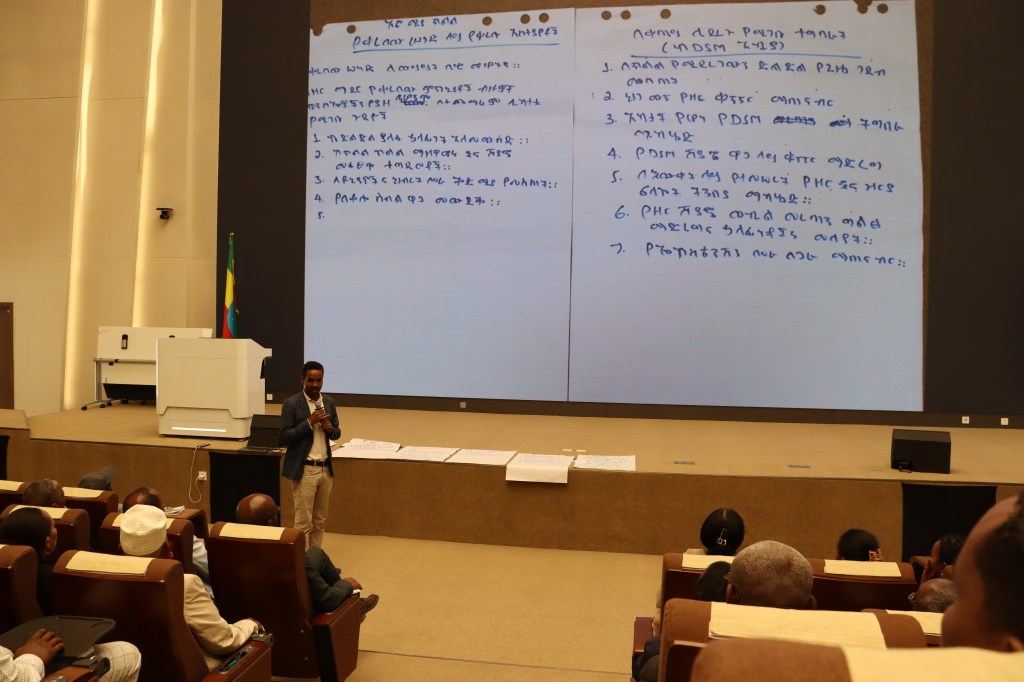
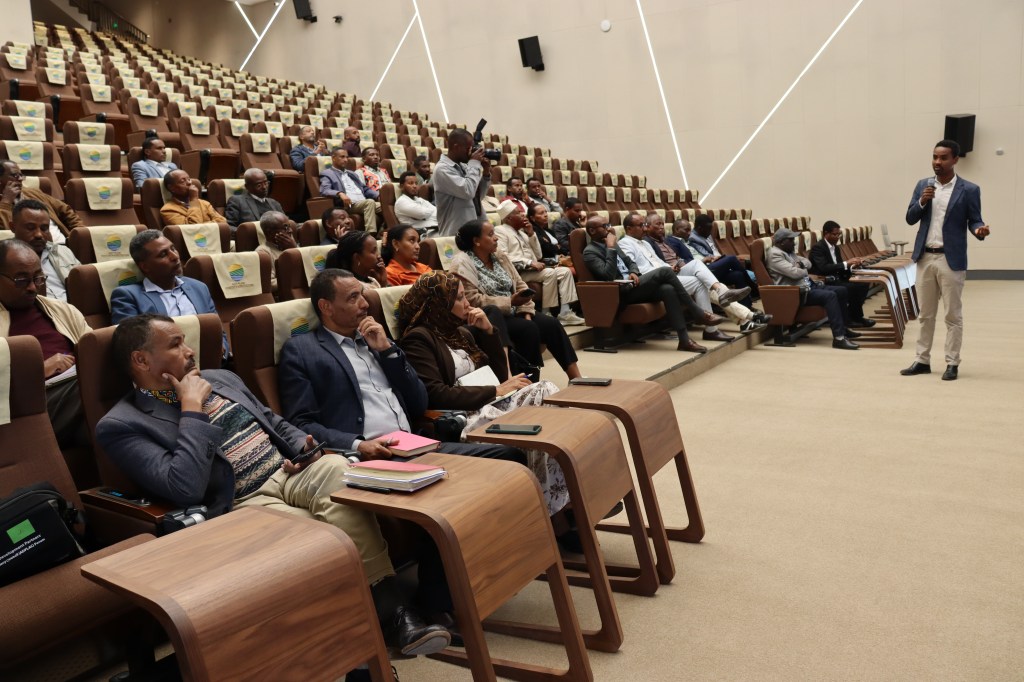
In accordance with the guidance given by the esteemed minister, a national stakeholders consultative workshop was held on 15 January 2025, in collaboration with the MoA. The workshop officially opened with remarks from Her Excellency Dr. Sofiya Kassa, the state minister for the Agricultural Investment Sector, who highlighted the significance of the study’s findings and stressed the need for collective action. She recognized the multifaceted challenges within the seed sector, including production inefficiencies, quality concerns, seed carry-over, and unmet seed demands in other regions. “There is no reason to hide anything,” she remarked. “We must engage in open discussions and outline our path ahead’’ she added.

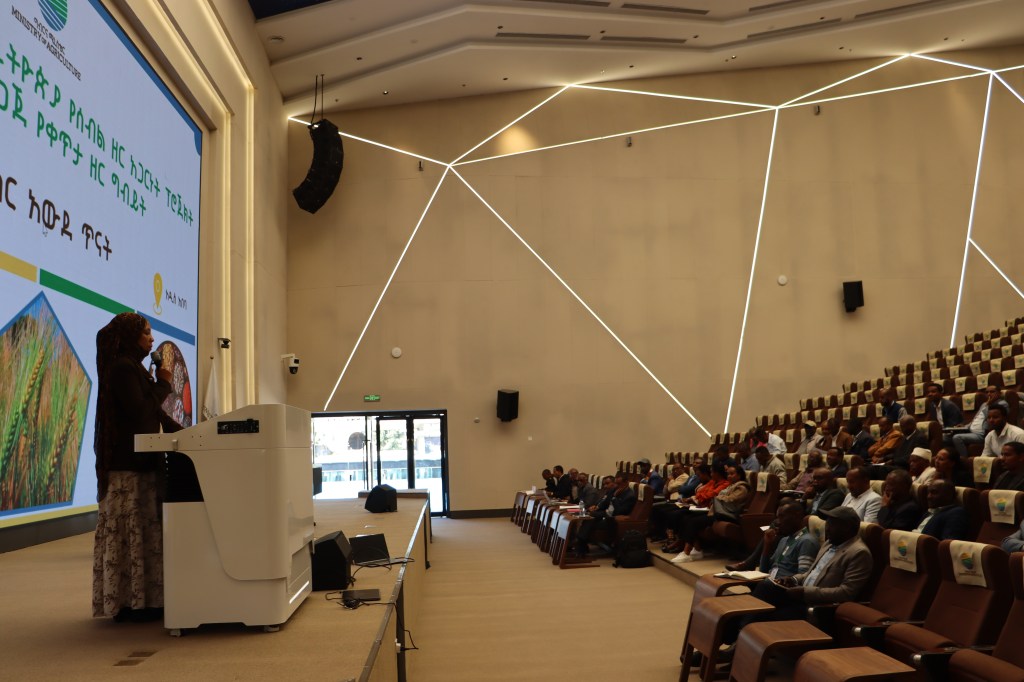
Dr. Gemechu Keneni, from EIAR and a representative of the study team, presented the rationale for conducting the study. He explained that Ethiopia’s national seed steering committee had identified a troubling trend: while some regions faced seed shortages, other areas were left with surplus seeds that went unsold. This phenomenon, known as seed carry-over, has become a growing issue. He also highlighted the key factors contributing to seed carry-over mentioned above and proposed solutions forward.
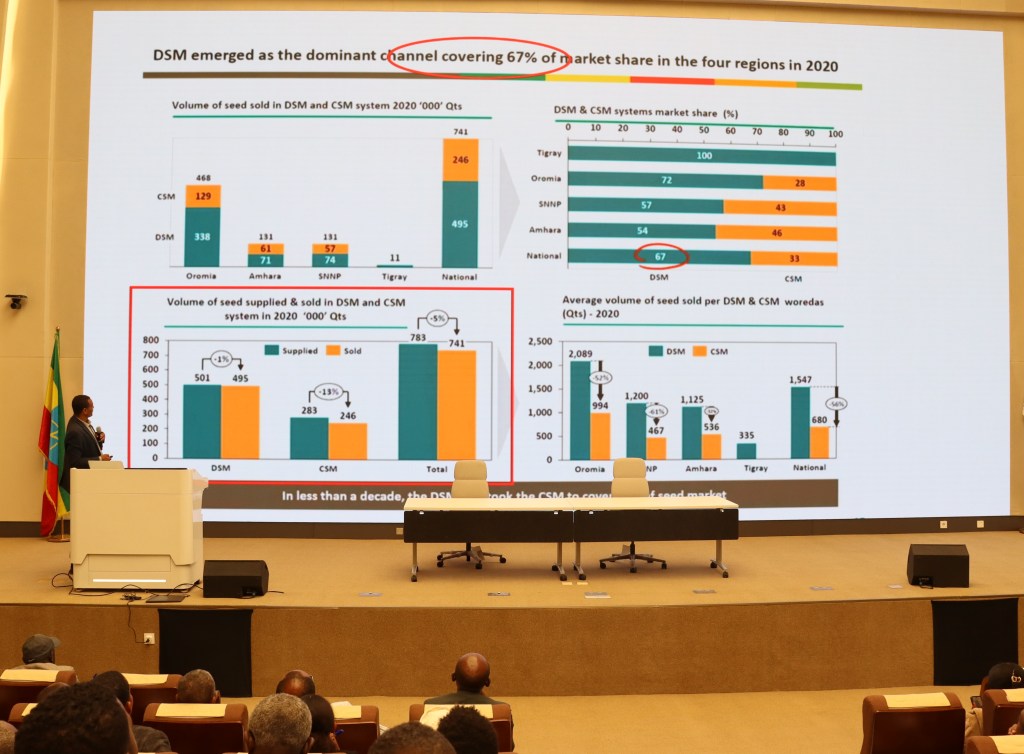
Following this, Dr. Mohammed Hassena, ESP project manager, shared insights from Ethiopia’s previous experience with DSM under the Integrated Seed Sector Development (ISSD) program. During its peak implementation, DSM accounted for 67% of total seed sales in the country. Dr. Mohammed emphasized that DSM ensures accountability, improves seed quality, and facilitates better movement of seeds across regions. While DSM has not yet been fully scaled nationwide, he expressed confidence that it has the potential to address many of the existing challenges in Ethiopia’s seed market.
Stakeholder reflections and next steps
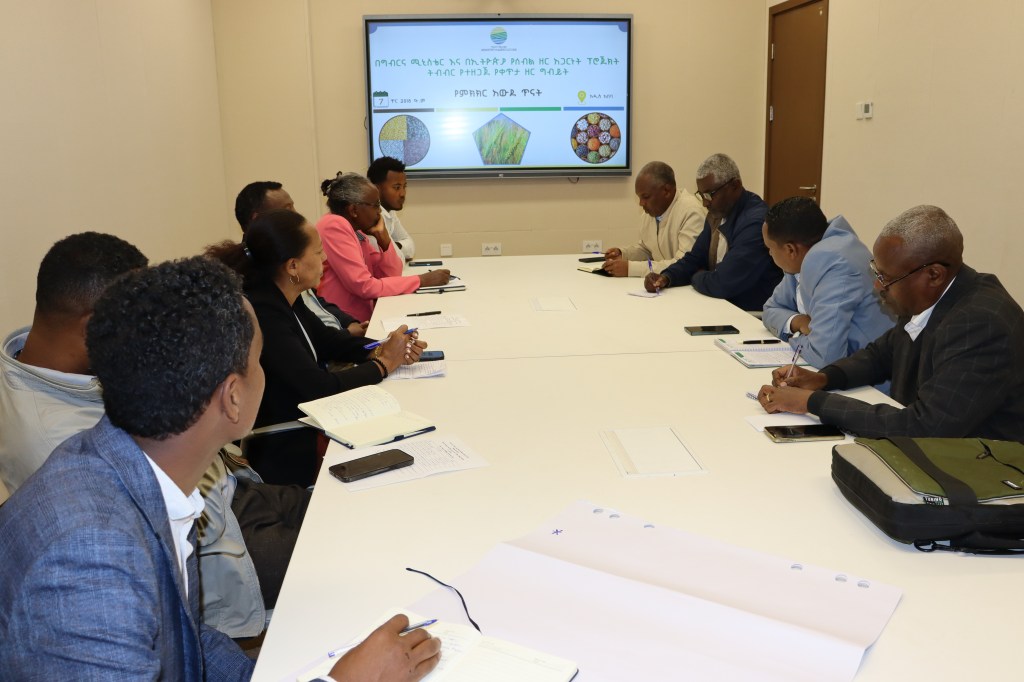
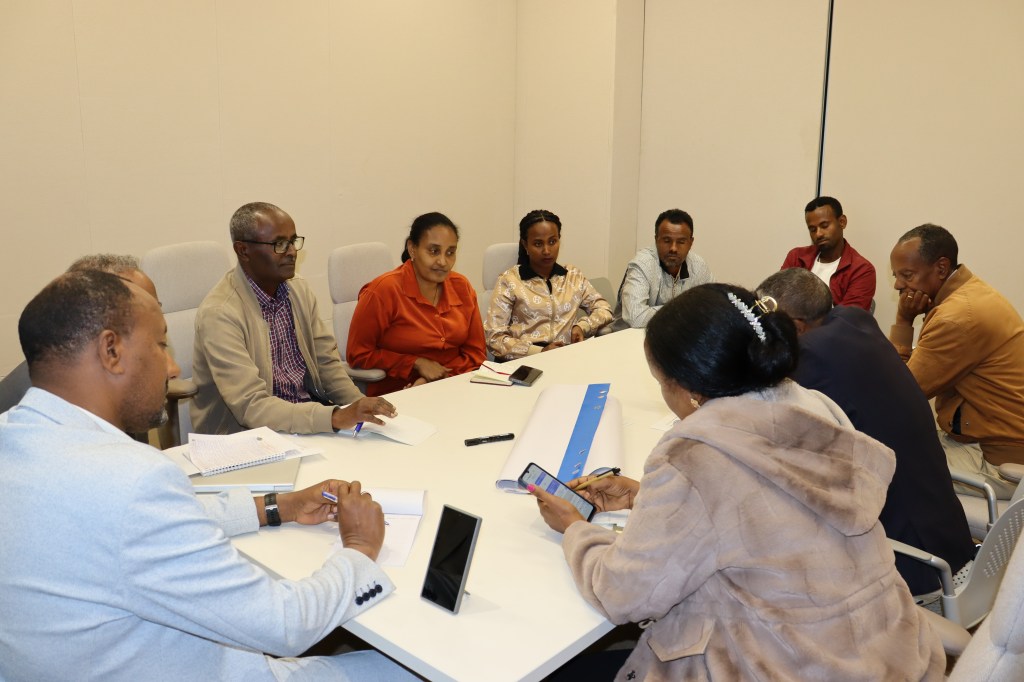
Following the presentations, participants engaged in group discussions to reflect on the study’s findings and explore ways to implement DSM in their respective regions. The groups unanimously recognized the validity of the study’s conclusions and acknowledged that the challenges presented mirrored realities on the ground. They agreed that DSM offers a promising solution to streamline seed marketing and address inefficiencies within the system. They also emphasized the importance of involving regional governments and other stakeholders in implementing DSM effectively.
A path forward for Ethiopia’s seed sector
During the closing session, participants raised questions about how the Ministry of Agriculture would support regional governments in implementing the proposed strategies. As the workshop concluded, participants raised critical questions regarding how the MoA would support regional efforts to implement the proposed strategies. In response, Dr. Sofiya assured attendees that DSM would be resumed this year to address inefficiencies in seed marketing. She also clarified that quota-based allocation would continue only for multinational seed companies producing hybrid maize, but with time bounded for equity reasons.
Dr. Sofiya emphasized that crop seeds should not be restricted by region or nationality; they must reach farmers who need them most. While the MoA is committed to providing support wherever needed, she stressed that regional authorities must take ownership of implementation efforts. To ensure smooth execution, targeted follow-up meetings with key seed actors across regions will be organized by MoA and ESP.
More than 40 participants attended the workshop, including officials and representatives from the Ministry of Agriculture, eight regional agricultural bureaus, public and private seed enterprises, cooperative unions, the Ethiopian Institute of Agricultural Research, the Ethiopian Agricultural Business Corporation, multinational seed companies (Bayer, SeedCo and Corteva), and ESP.

You must be logged in to post a comment.