

A National Seed Forum was convened on March 7, 2026, at the Ministry of Agriculture meeting hall in Addis Ababa, Ethiopia. Organized by the Ethiopian Seed Association (ESA) with support from the Ethiopia Netherlands Seed Partnership (ESP), and Agricultural Transformation Institute (ATI), the forum was held under the theme “Quality Seed for Food System Transformation.” The event
brought together over 65 participants, including representatives from private seed companies, public seed enterprises, multinational seed companies, farmers’ cooperative unions the Ministry of Agriculture (MoA), the Ethiopian Agricultural Authority (EAA), EARI & RARI, the Agricultural Transformation Institute (ATI), International Development Enterprise (iDE), GIZ, and SWR
Ethiopia.
the forum was held under the theme “Quality Seed for Food System Transformation.” The event brought together over 45 participants, including representatives from private seed companies, public seed enterprises, the Ministry of Agriculture (MoA), the Ethiopian Agricultural Authority (EAA), the Agricultural Transformation Institute (ATI), GIZ, and SWR Ethiopia.
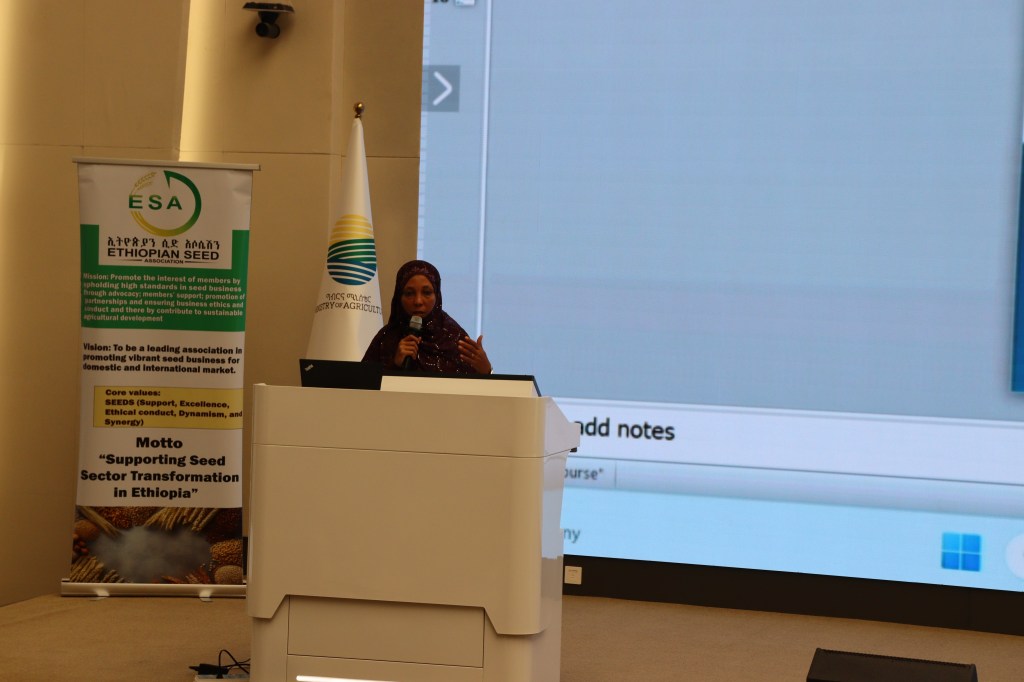
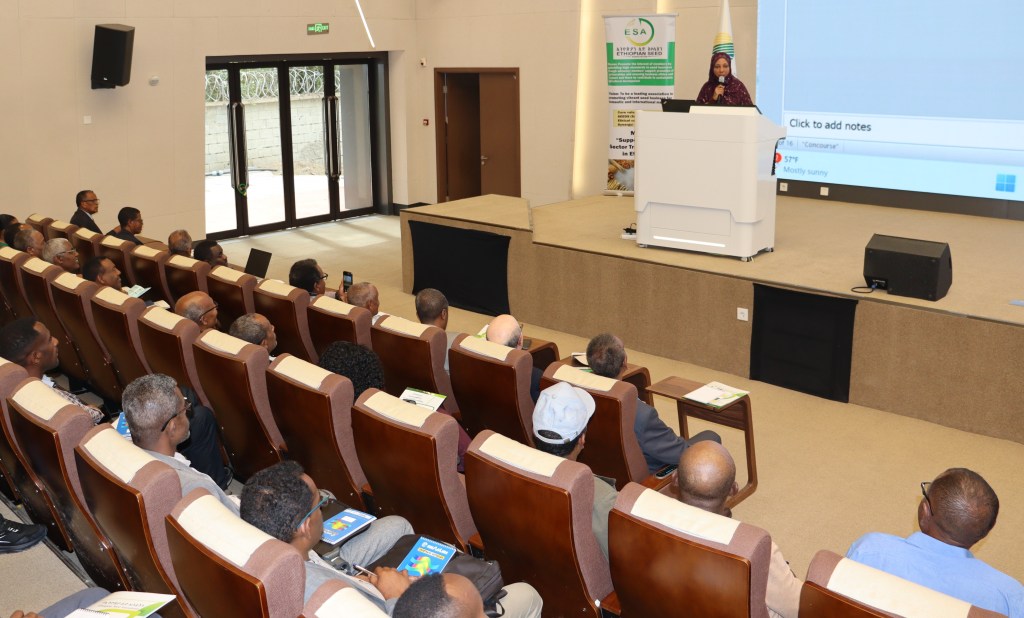
Her Excellency Dr. Sofiya Kassa, State Minister for the Agricultural Investment Sector, delivered the keynote address, emphasizing the efforts made by various stakeholders to enhance Ethiopia’s seed sector. She acknowledged progress in the sector but underscored that it still falls short of expectations. Dr. Sofiya highlighted several challenges, including seed carryover issues, unmet seed demand, and the prevalence of counterfeit seeds in parts of the country. She called for enhanced collaboration between stakeholders and reiterated the Ministry’s commitment to working closely with ESA to transform the seed industry and bolster its role in ensuring food security and economic growth.
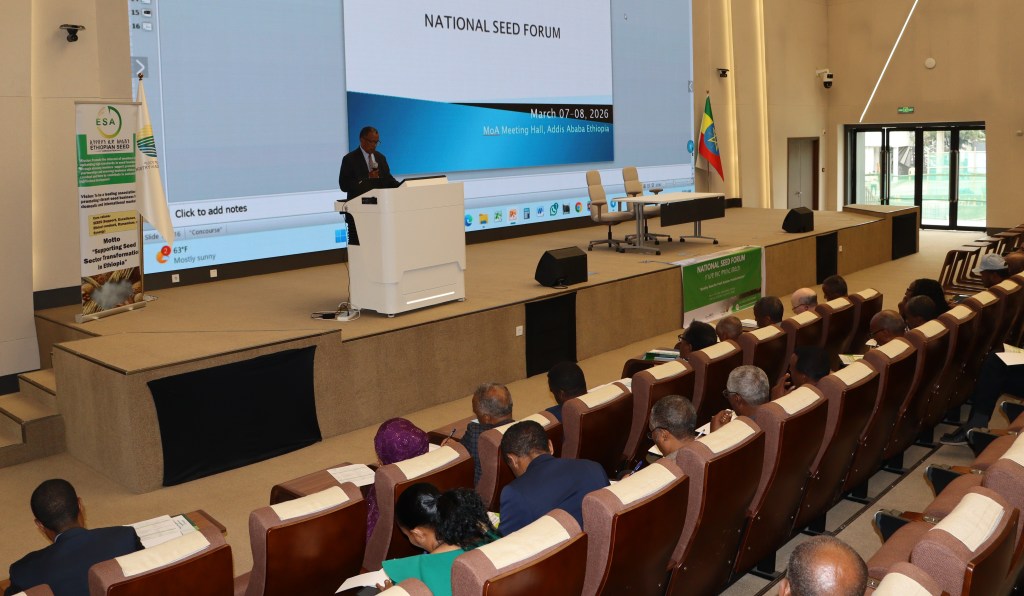
Melaku Admasu, Chairman of ESA’s Board, welcomed attendees and commended the contributions of the 62 member seed companies within the association. He acknowledged government efforts to improve the legal and regulatory framework for the seed sector but noted that further action is needed to address critical challenges. These include inadequate seed sector infrastructure, limited access to financial services for seed companies, a lack of a comprehensive seed sector information system, and the ongoing issue of counterfeit seeds.
Melaku also expressed ESA’s aspiration to host the Africa Seed Trade Association (AFSTA) Congress and sought support from participants to achieve this goal. He emphasized the importance of hosting the AFSTA Congress in Ethiopia, highlighting its potential to significantly promote the Ethiopian seed industry. Additionally, he emphasized that the forum’s objective is to foster dialogue, share positive developments in Ethiopia’s seed sector, and facilitate business-to-business linkages. He extended his appreciation to ESP for its support in organizing the forum and other supports to strengthen the association.
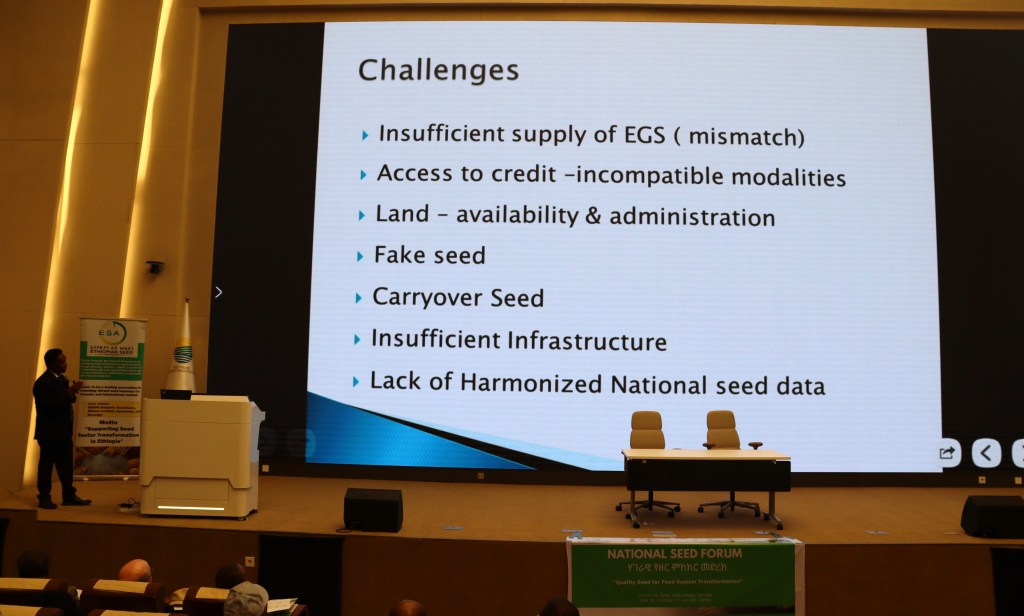
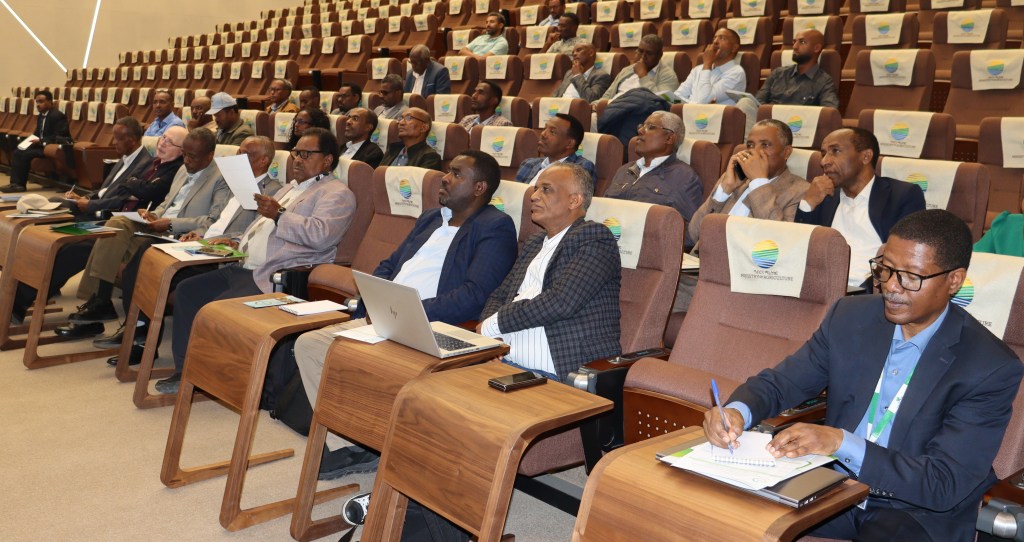
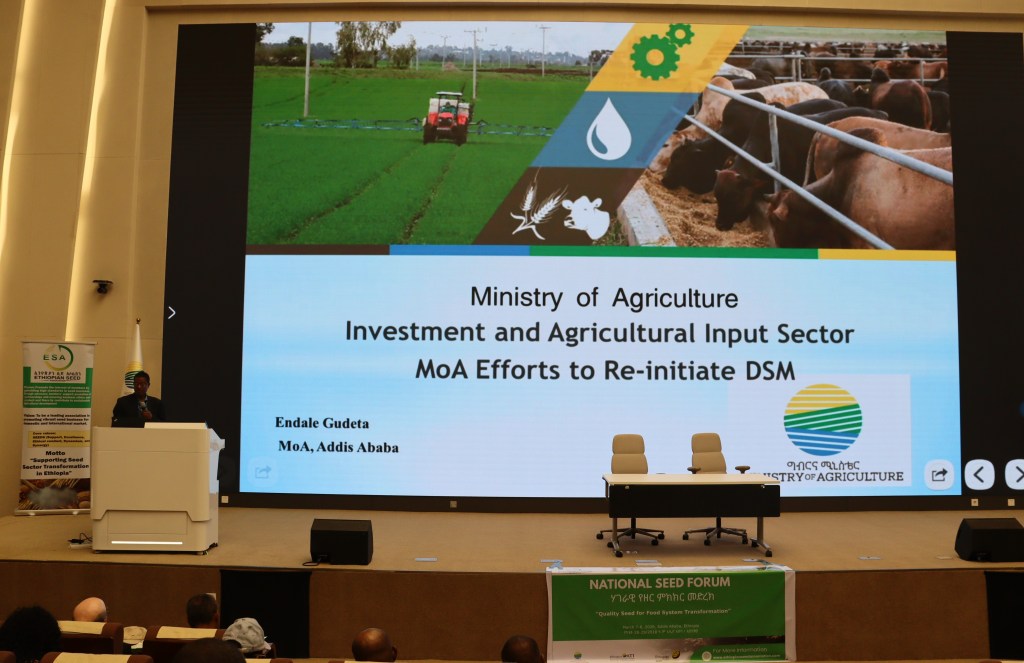
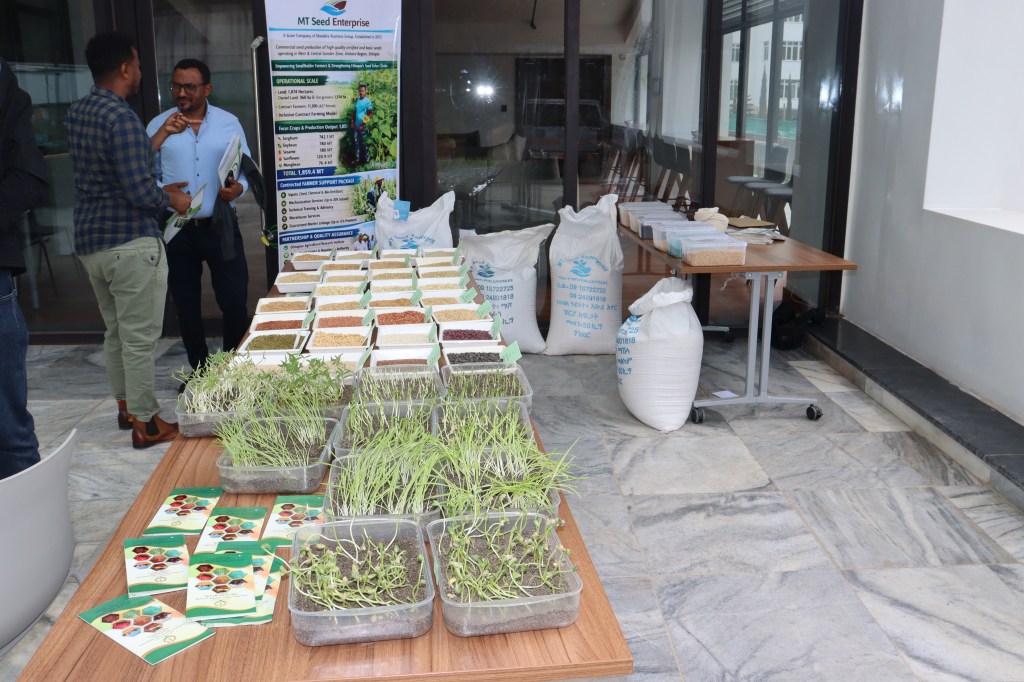
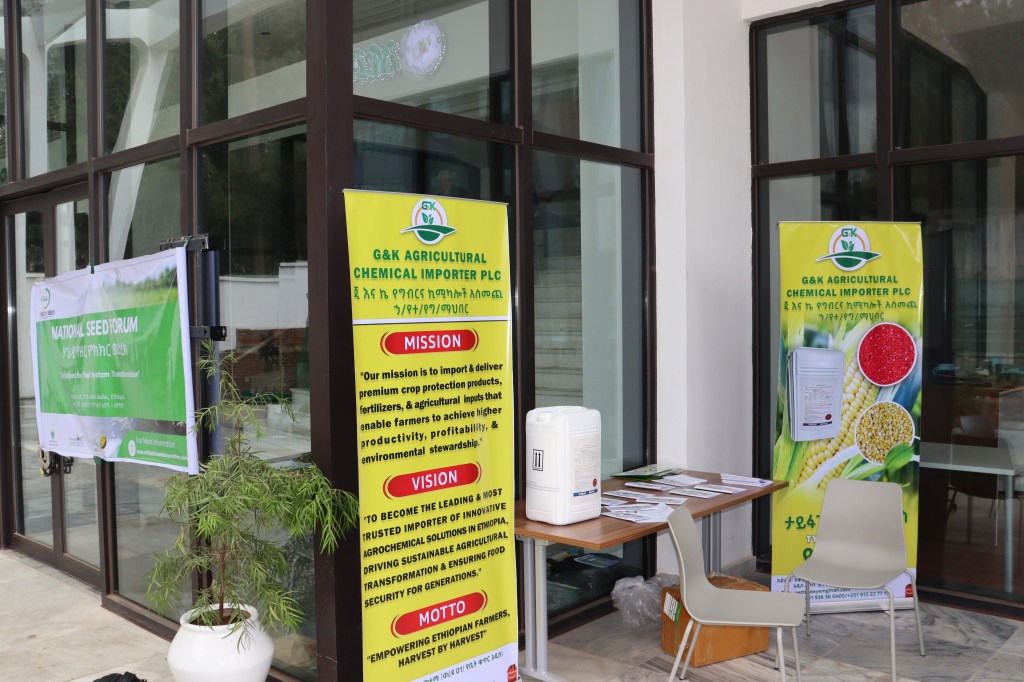
The forum featured a series of presentations on key topics, including ESA’s status, MoA’s efforts to reintroduce Direct Seed Marketing (DSM), policies supporting public-private partnerships and seed producer cooperatives, and updates on Ethiopian seed sector regulatory tools. Participants engaged in discussions and provided reflections on these presentations. During tea and lunch break some member companies showcased their products and services they provide to participants.
During the final discussion session, led by Dr. Sofiya, several critical issues were raised by participants. Key concerns included that there has to be adequate seed production that meet demand or more to effectively implement DSM, enhancing regulatory oversight to prevent inefficiencies in DSM operations, strengthening legal frameworks to combat counterfeit seeds and illegal trade, improving access to financial services for seed companies, and addressing delays in delivering barcodes and tags to producers. Participants also urged the government to facilitate export opportunities for unsold or carryover seeds and expand its focus beyond maize and wheat seeds.
Responding to these reflections, representatives from MoA, EAA, and ESA addressed participants’ concerns. Fisseha Abebe, Director of Plant Variety Release, Protection, and Seed Quality Control at EAA, explained that tags are issued only after seed cleaning and quality verification as per regulations. He assured participants that efforts would be made to enhance regulatory efficiency. Fisseha also emphasized the importance of strengthening measures against counterfeit seeds and illegal practices while ensuring proportional penalties for offenders.
In her closing remarks, Dr. Sofiya provided guidance to respective government bodies on addressing the raised concerns. She assured participants that the ministry is well-prepared for DSM implementation and emphasized the importance of creating awareness about DSM through mainstream media. She highlighted ongoing initiatives aimed at improving access to finance for the agricultural sector, including the establishment of an agricultural bank under the National Agricultural Finance Implementation Roadmap (https://nbe.gov.et/nafir/). This strategic framework, launched by the National Bank of Ethiopia (NBE) in collaboration with MoA, aims to enhance agribusiness financing from 2025 to 2030.
Dr. Sofiya reaffirmed MoA’s commitment to transforming Ethiopia’s seed sector and urged ESA members to strengthen their association to better represent their interests. She also encouraged stakeholders to collaborate with the ministry by sharing innovative ideas to drive progress in the sector.
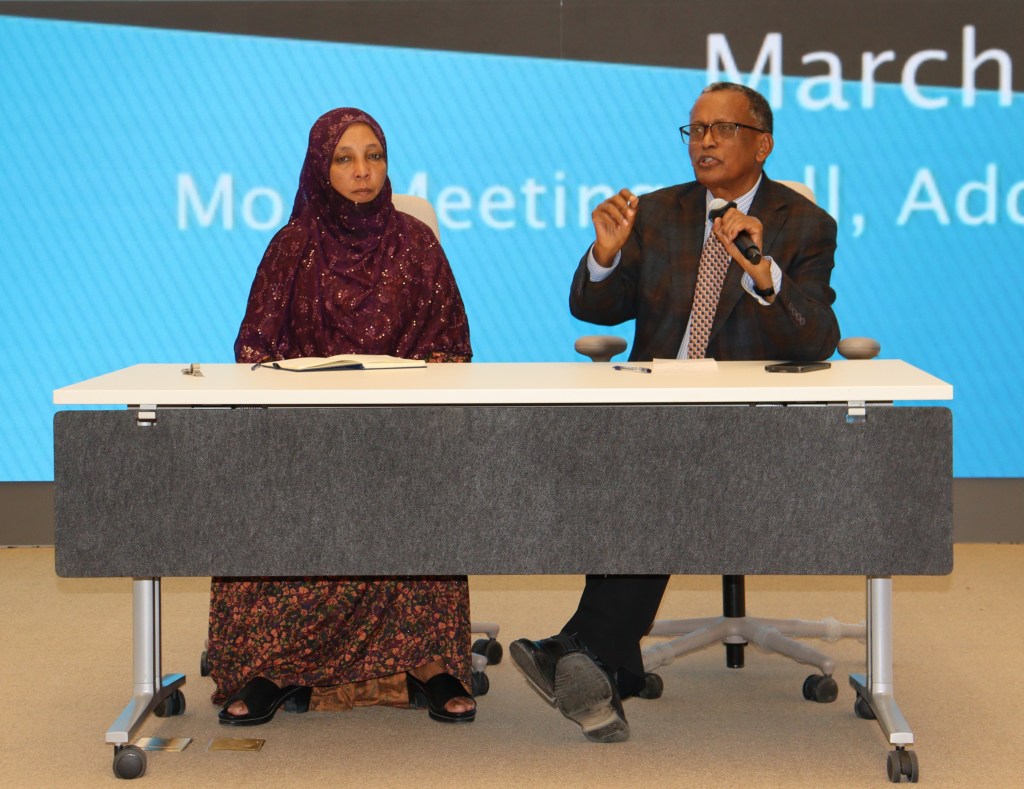
Participants expressed their appreciation for the government’s increasing support for the seed industry and commended ESA and ESP for organizing a platform that brought together key stakeholders and high-level officials. The forum concluded with a collective commitment to address existing challenges and capitalize on opportunities to advance Ethiopia’s seed sector for sustainable food security and economic development.

You must be logged in to post a comment.