


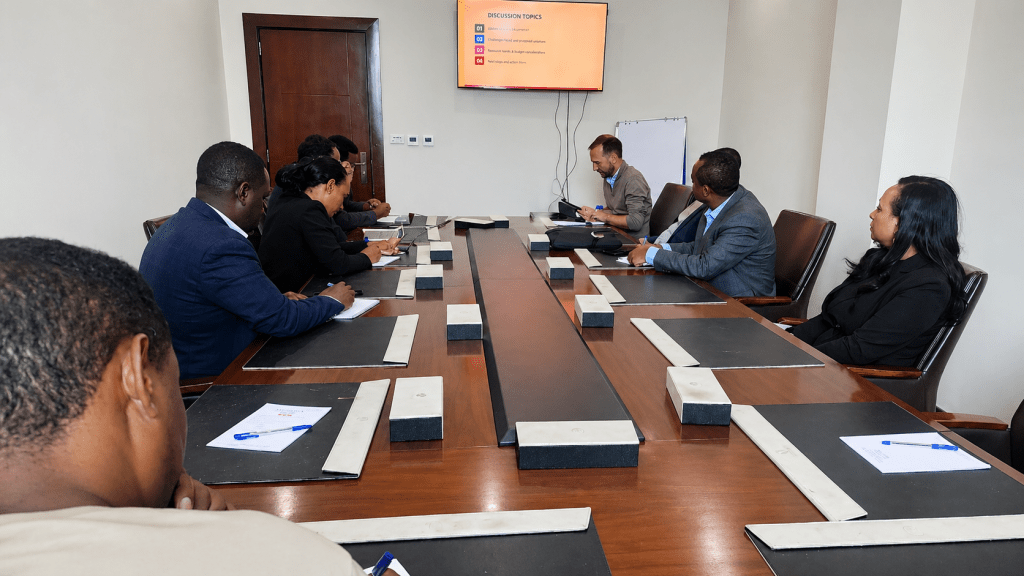
On April 24th, 2026, the Ethiopia-Netherlands Seed Committee had a regular meeting to discuss on pressing issues that affect vegetable seed business and chart a path forward for Ethiopia’s seed sector. The agenda covered pivotal topics such as variety testing for registration, legal framework approval and enforcement, Plant Variety Protection (PVP), illegal seed trade
Tackling challenges in variety testing for registration
The committee reviewed progress in independent variety testing for registration, which has shown promising results in piloting bread wheat and vegetable varieties. However, significant challenges remain. The EAA faces resource constraints, a shortage of skilled manpower specifically breeders, and institutional gaps in the Distinctness, Uniformity, and Stability (DUS) and National Performance Trials (NPT) systems. Additionally, testing has yet to expand to other priority crops like maize, and the Variety Adaptation Testing guideline remains in draft form.
EAA representatives acknowledged these hurdles and highlighted ongoing efforts to address them. They are actively mobilizing resources from various sources and working with government to secure additional breeders and strengthen their capacity. These steps are critical to ensuring the sustainability of independent variety testing and expanding its scope. With regards to crops for which DUS has been done elsewhere, the activities will continue as per the existing regulation, but the challenge remains with who should handle the adaptation trials. While companies can handle the trials, they must have the certificate of competence to undertake the trials. Yet guideline to undertake the adaptation trials was not yet finalized. As a result, it was agreed that EAA finalize the guideline and publicize it so that all companies follow the guideline.
Progress and bottlenecks in regulatory framework approval
The committee also reviewed progress in revising service fee regulations, which are crucial for improving the operational efficiency of regulatory bodies. While progress has been made, the delay in formal approval after its validation by the stakeholders few years backs continue to hinder regulatory service delivery. This lag weakens cost recovery mechanisms and limits the effectiveness of regulatory operations.
Committee members emphasized the need for continuous lobby and expedited approval of this regulation to enhance the seed sector’s overall functionality. Streamlining these processes is essential to ensure timely and effective service delivery.
Addressing the threat of illegal seed trade
The rise of illegal seed trade emerged as a significant concern during the meeting. The proliferation of unregistered and counterfeit vegetable seeds both at border and Bole international airport poses a serious threat to seed companies operating genuinely in the Ethiopia’s seed sector. The existing awareness creation efforts are fragmented and lack coordination.
Moreover, the committee recognized that current regulations are insufficient to tackle counterfeit seeds effectively. Hence, there is no legal ground from the seed perspective to sue if someone is involved in illegal seed and current practice is to use criminal law. Members proposed amending the seed law to include the punishments so that it will be easy to detail in the regulation/directives to address the issue comprehensively while also ramping up awareness campaigns among actors. A coordinated approach among regional regulatory authorities and seed companies is essential to mitigate the risks posed by illegal seed trade.
Plant Variety Protection
Initiating the implementation of Plant Variety Protection (PVP) in Ethiopia was another key topic of discussion. Beyond the seed sector, the PVP implementation is also related to Ethiopia’s aspirations to join the World Trade Organization (WTO). While participants expressed strong demand for operationalizing PVP, several barriers were identified. These include the absence of a dedicated PVP unit within EAA and experienced expertise.
To address these challenges, the committee suggested piloting PVP with less sensitive crops and registering a limited number of varieties under existing laws. Establishing a dedicated PVP unit and leveraging expertise were also recommended as essential steps toward building institutional capacity.
Looking ahead
The Ethiopia-Netherlands Seed Committee meeting highlighted both significant progress and critical challenges in running seed business in the Ethiopia’s seed sector. While progress have been made in variety testing and regulatory framework approvals, resource limitations and gaps in institutional capacity remain pressing issues. The illegal seed trade and the growing demand for PVP implementation further underscore the need for coordinated action.
The committee underlined by addressing these challenges head-on and leveraging more, can pave the way for a more resilient and competitive seed sector.

You must be logged in to post a comment.