


In Ethiopia, the seed system is the backbone of agricultural productivity and food security, yet it faces numerous challenges. At the heart of these challenges lies the critical relationship between seed producers and regulatory authorities. This partnership determines whether farmers receive high-quality, certified seeds on time. However, mismatched expectations, resource limitations, and regulatory bottlenecks have often strained this relationship.
Recent dialogues held in the Oromia and Amhara regions brought these stakeholders together to discuss their shared challenges, explore opportunities for collaboration, and build trust across the seed value chain. The discussions revealed a wealth of insights into the current state of Ethiopia’s seed systems and laid the groundwork for future progress.
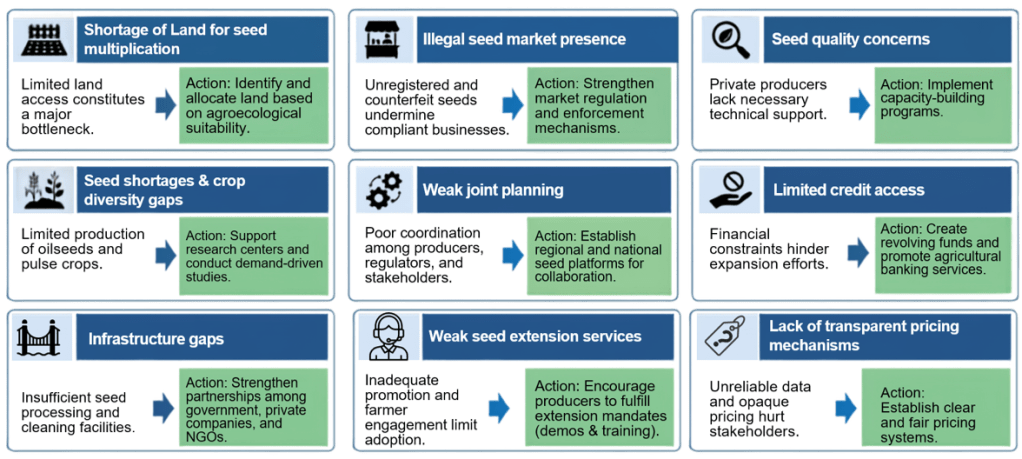
Seed producers highlighted pressing issues that hinder their operations. Major ones among these were difficulties in accessing land for seed multiplication and expansion, limited financial resources, and the persistent threat of illegal seed trade. Producers emphasized that while they strive to meet certification standards, the process can be inconsistent across regions and often takes too long—especially for companies operating in multiple locations.
Additionally, producers expressed the need for transparent regulatory guidelines, predictable timelines, and enhanced technical capacity-building programs. These measures, they argued, would enable them to meet quality standards more efficiently and compete fairly in the market.
On the other hand, regulatory authorities underscored their commitment to ensuring seed quality and protecting farmers from substandard products. However, they face their own set of challenges, including limited logistics capacity for field inspections, resource shortages, and difficulties enforcing uniform standards across Ethiopia’s diverse regions.
Regulators also pointed to gaps in technical infrastructure and staff training as barriers to effective service delivery. They called for better coordination with producers and stronger legal frameworks to combat illegal seed trade. Despite these challenges, regulators acknowledged the need for a more collaborative approach to address systemic inefficiencies.
The dialogues in Oromia and Amhara revealed a striking overlap in the challenges faced by both producers and regulators. Key issues emerged as priorities for action:
The way forward
The dialogues made one thing clear: sustainable progress in Ethiopia’s seed system requires collaboration between producers and regulators.
Producers need a supportive regulatory environment to thrive, while regulators rely on producers’ compliance to ensure quality standards are met. Building trust between these two parties essential for creating a system that works for all stakeholders.
Key recommendations included shared investments in laboratory infrastructure and seed cleaning equipment, transparent communication channels for resolving disputes quickly, and coordinated action against illegal seed trade to ensure fair competition. Both sides also emphasized the importance of financial mechanisms like revolving funds to empower producers, as well as institutionalized platforms for ongoing dialogue and joint planning.

You must be logged in to post a comment.