


In the face of seed insecurity, particularly in fragile areas, humanitarian efforts have traditionally centered on immediate relief through emergency seed aid. However, as the challenges in regions like Tigray, Ethiopia, have shown, sustainable solutions are crucial for long-term resilience. In response, Mercy Corps Ethiopia has piloted a market-based seed insecurity response in Tigray. This initiative is part of the broader ESP Seed Insecurity Response (ESP-SIR) Program, which seeks to redefine traditional aid methods by leveraging local market systems to enhance local seed systems.
Building on the insights from a recent study Seed System Security Assessment (SSSA) and by leveraging the Market Systems Development (MSD) approach, the program aimed to empower local economies while providing smallholder farmers with access to quality seeds. By channeling aid through existing agricultural marketing networks, the approach has not only supported local economies but also empowered smallholder farmers with access to quality seeds of locally adapted varieties of major food security crops.
The voucher system
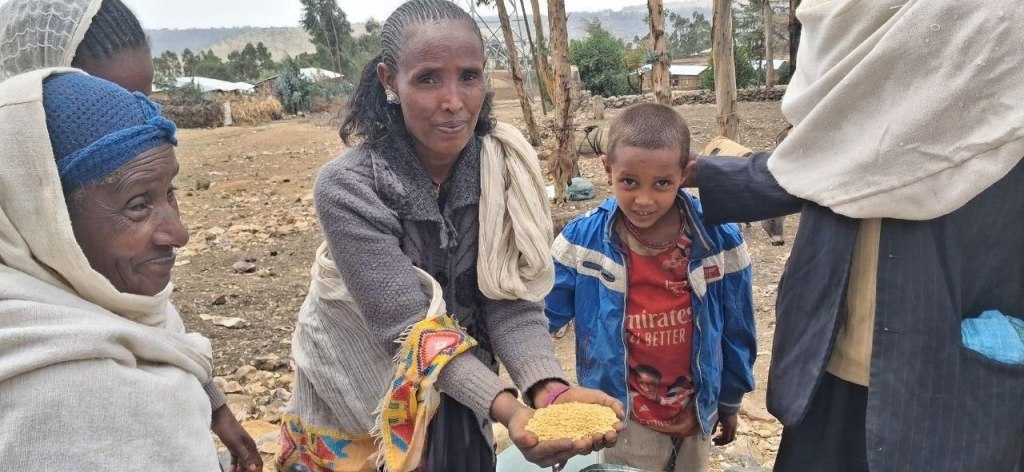
Central to this pilot was a voucher-based mechanism that redefined seed assistance delivery. Participants received vouchers to redeem at local seed suppliers, preserving farmer choice and stimulating local supply chains. A notable feature was the 80/20% cost-sharing arrangement, where Mercy Corps covered 80% of seed costs through vouchers, while households contributed the remaining 20%. This model fostered community investment and ownership, laying a stronger foundation for a sustainable seed sector development.
Building local market linkages
The voucher program was facilitated through a partnership with Desta Berhe Business Group, a local input supplier. This collaboration ensured that humanitarian response stimulated rather than disrupted local markets, allowing smallholder farmers timely access to quality seeds. The partnership also illustrated how humanitarian programming can effectively bridge supply and demand when designed to work with existing local market actors. By integrating humanitarian efforts with local markets, the ESP-SIR program has demonstrated that humanitarian supports can effectively meet demand while strengthening local agri-input market systems for long-term resilience.
Community and partner responses
Feedback from program participants has been positive. Farming households appreciated the quality of seeds and expressed optimism for improved harvests. The voucher system empowered them to engage directly with markets, enhancing their dignity and self-determination. Meanwhile, Desta Berhe Business Group expressed enthusiasm for replicating the model with other humanitarian organizations, highlighting the commercial opportunities in underserved rural markets.
Impact on agricultural production
A total of 300 quintals of certified improved seeds were distributed, expected to cover 626 hectares and yield 19,468 quintals of produce. Farmers expressed satisfaction with the seed quality and plans to retain some harvest for future planting, indicating confidence in the program’s long-term benefits.
Stakeholder engagement
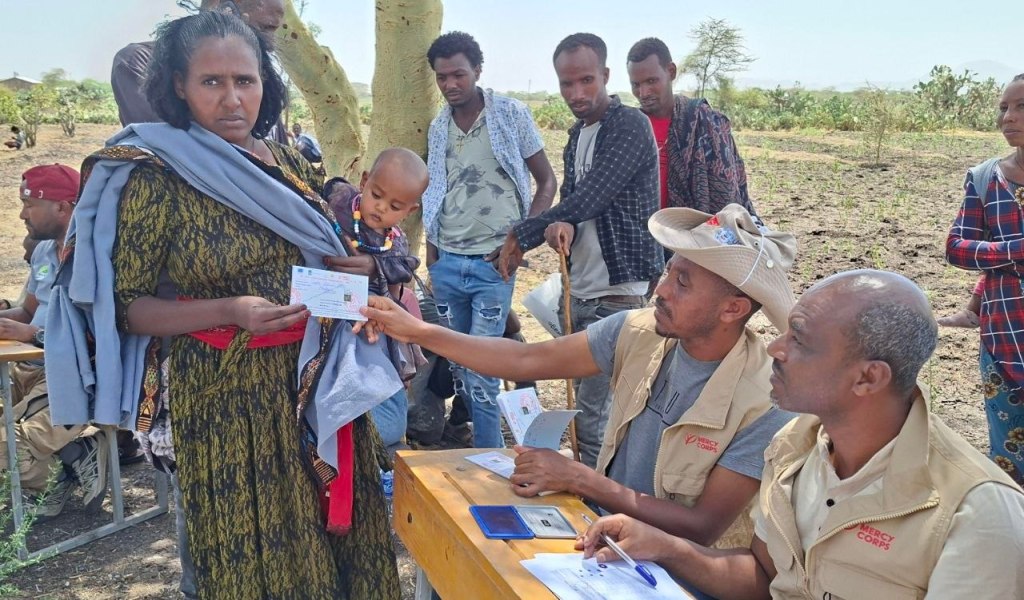
The pilot’s success is a strong evidence that assert by strong stakeholders and partners engagement from regional and woreda level, who provided essential oversight and coordination. The program received public recognition through regional media, reinforcing community trust and alignment with governmental priorities.
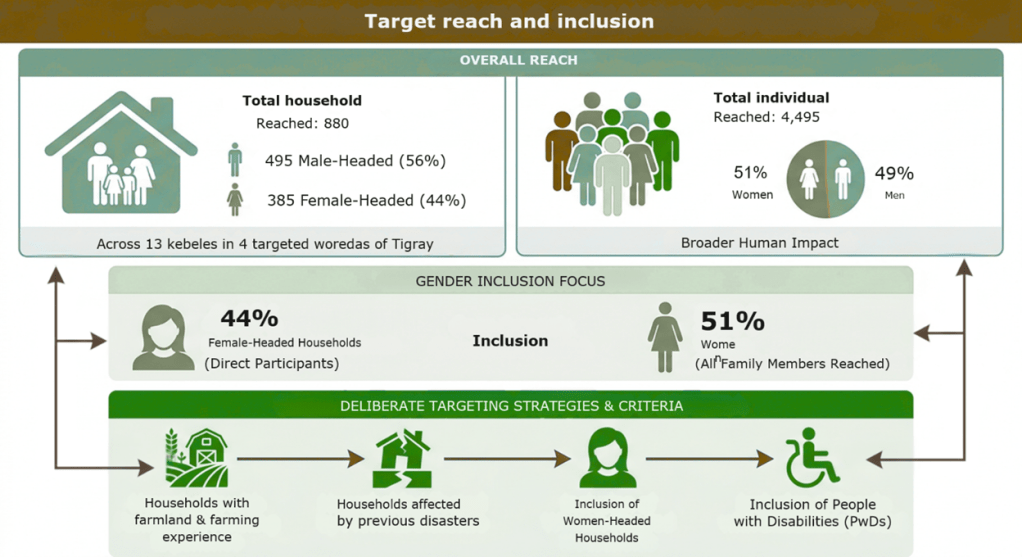
Looking ahead, the success of this pilot in Tigray provides Mercy Corps with compelling evidence to advocate for scaling market-based seed response approaches in other regions, such as Afar and Somali. The combination of community co-investment, engagement of local market actors, gender-inclusive targeting, and strong public organizations support sets a new standard for humanitarian agricultural response; one that is effective in the short term and transformative in the long term.

You must be logged in to post a comment.