


Ethiopia’s seed sector faces two contrasting El Niño risks: below-average June–September rainfall in western and central areas, and above-average October–December rainfall with greater flood risk in eastern and southern areas. The August 2026 FSNWG special report, “Strengthening El Niño Conditions: Implications for Rainfall, Flood Risk and Food Security in Eastern Africa” warns that these conditions could disrupt seed production, markets, quality, logistics, and finance. Seed companies, regulators, research institutions, producers, distributors, and development partners need to act early.
What the outlook means for Ethiopia
- Contrasting rainfall risks: Western and central Ethiopia may receive below-average rainfall during the main June–September season. Eastern and southern areas may instead face above-average rainfall and flooding from October to December. Seed demand, production, and delivery conditions will therefore vary sharply by location.
- Seed production exposure: Moisture stress can reduce multiplication yields, germination performance, and the volume of marketable seed. Excess rain and flooding can damage seed fields, delay harvesting, increase disease pressure, and complicate drying and processing.
- Food-security link: Reduced crop and livestock productivity, water shortages, and disrupted planting may increase demand for emergency seed and for short-cycle, drought-tolerant, and locally adapted varieties. At the same time, lower farmer purchasing power could weaken commercial sales unless financing or public procurement support is available.
- Need for anticipatory action: Seed-sector actors should use updated forecasts before seasonal shocks occur to adjust production targets, allocate stocks, schedule quality control, plan transport, and inform agro-dealers and farmers.
Key implications for seed companies in Ethiopia
- Production risk: Drought may reduce seed multiplication output in western and central production zones; excessive rain may cause field losses, disease, delayed harvest, and post-harvest quality deterioration in eastern and southern zones.
- Demand uncertainty: Planting dates, replanting needs, crop choices, and variety preferences may shift quickly. Demand could increase for early-maturing, drought-tolerant, flood-tolerant, disease-resistant, and locally adapted varieties, but companies must match supply to the right place and time.
- Inventory and quality risk: Companies may face shortages of suitable varieties in one zone and unsold stock in another. Humidity and disrupted drying can also threaten germination, purity, and storability.
- Distribution risk: Flooded roads, damaged infrastructure, and localized insecurity of access can delay last-mile delivery during narrow planting windows.
- Financial risk: Lower farmer incomes can weaken cash sales and increase receivables, while emergency procurement may create opportunities but also expose companies to late orders, compressed delivery schedules, and payment delays.
- Reputational risk: Promoting varieties without matching them to local rainfall outlooks, agroecology, and verified performance can undermine farmer trust and increase complaints.
Evidence from supported private seed companies
The impact of El Niño on seed production in Ethiopia has been significant. This climatic event has brought about significant moisture shortages and irregular rainfall patterns, severely affecting seed production across various regions in the country. The ESP+ project has been closely monitoring these developments, especially with companies it is supporting.
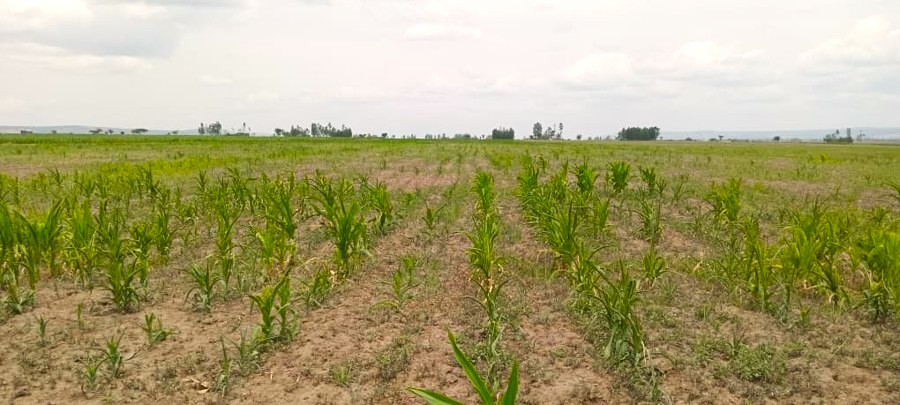
One of the most affected areas is Central Ethiopia, where two seed companies working with the ESP+ project were compelled to replant approximately 600 hectares of maize seed fields. The irregular rainfall and moisture shortages disrupted the initial planting, necessitating this costly and labor-intensive replanting process. Similarly, in Oromia, a company managing wheat seed production experienced inadequate moisture levels, adversely affecting around 20 hectares of their crop.
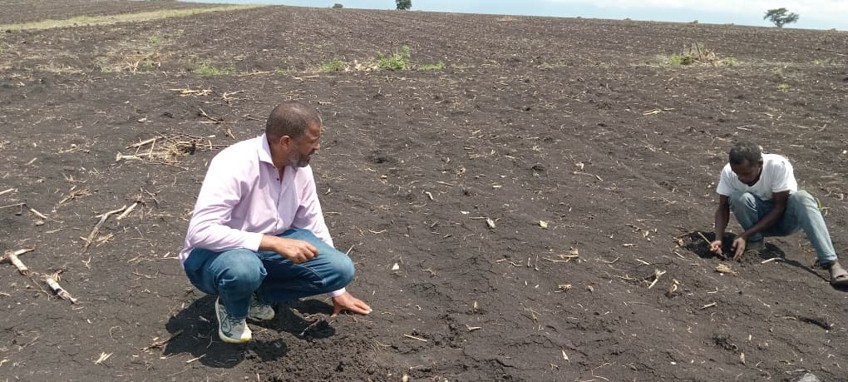
The situation in Benishangul-Gumuz was equally challenging. Delayed and insufficient rainfall led to two companies missing the optimal sowing window. This timing is crucial for seed production as it determines the quality and yield of the crop. Missing this window meant that these companies were unable to produce any seed for that season, resulting in higher operational costs and increased production risks.
The challenges of these disruptions extend beyond immediate financial losses for the seed companies. They also pose a threat to food security in the region, as fewer seed production opportunities can lead to reduced crop yields in subsequent planting seasons. This situation underlines the importance of developing resilient agricultural practices and infrastructure that can withstand the unpredictable nature of climate events like El Niño.
Efforts are needed to support these seed companies in adapting to changing climatic conditions. This could include investing in irrigation systems, researching drought-resistant crop varieties, and implementing advanced weather forecasting technologies. By taking proactive measures, the agricultural sector in Ethiopia can better prepare for future climate challenges and ensure sustainable food production for its population.
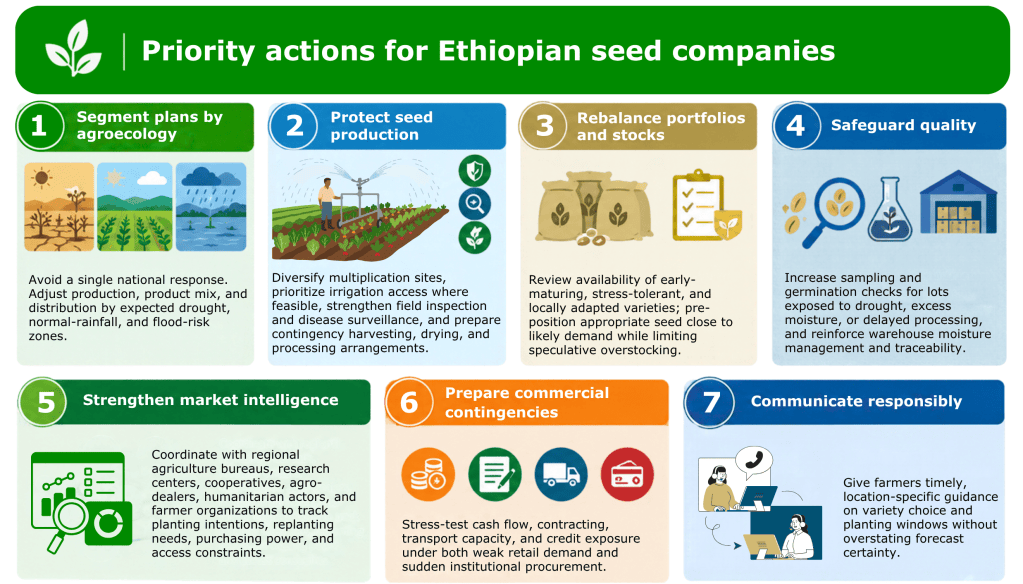
Seed companies should monitor rainfall forecasts, dry spells, floods, road access, crop development, disease, expected yields, and seed-quality results. They should also track changes in farmer demand, government and humanitarian procurement, and the availability of basic seed for future production cycles. Combining climate information with decentralized production, careful inventory management, quality assurance, flexible distribution, and financial planning will help public and private actors deliver the right seed to the right place within the planting window.

You must be logged in to post a comment.