
Effective seed regulatory service provision
Both at federal and regional state levels, the capacity for effective seed regulatory service provision is inadequate. This relates to the number of staff employed, their knowledge and skills, incentives for increasing their motivation, and physical resources available to implement their tasks effectively.
The partnership will support effective service provision which is essential to guide and transform the seed sector. These include stakeholder organization around producers, service providers, and traders; regulation; coordination; and revenue generation and investment in sector strategic areas of research and development.
Fostering collaborative governance
Systems and networks improving seed sector coordination at federal and regional state levels will be strengthened but also introduced in the humanitarian, development, and peace (HDP) triple nexus.
Platforms or networks will contribute to policy development and implementation, and coordination at federal and regional state levels.
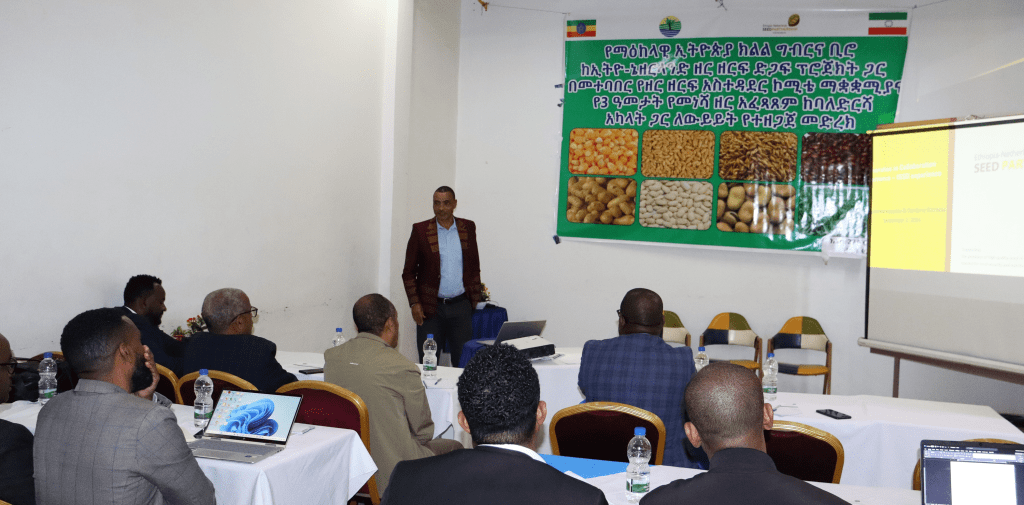
- The Partnership lnds its convening power to governing platforms and will support them with ideas and ensure their effective facilitation and institutionalization.
- We assume that one or more of these will also succeed in uniting the HDP communities. We strive to improve their collaboration, and synergy, and will create this HDP nexus in the seed sector.
- Focusing on underlying complex problems in the Ethiopian seed sector, opportunities for system innovation will be explored through research, participation in the community of practice on ISSD Africa and RAISE-FS.
- This includes learning from innovations that have proven their value in other African countries.
Enhancing regulatory service provision
We will work with MoA, EAA, and ATI to review policy and regulation in consultation with key stakeholders and propose amendments to them. Amendments will focus on clarifying and wherever possible simplifying key regulatory services, on ensuring that these are implemented without prejudice, and on attracting far greater rates of private domestic and foreign direct investment in the seed sector Seed regulatory bodies will be strengthened in their leadership, human resources, cost recovery and provision of quality services. We support EAA, regional regulatory authorities, and other delegated bodies to take up their roles effectively.
Given the magnitude of support needed, we assume that we can find shared interest to join hands with other initiatives including the
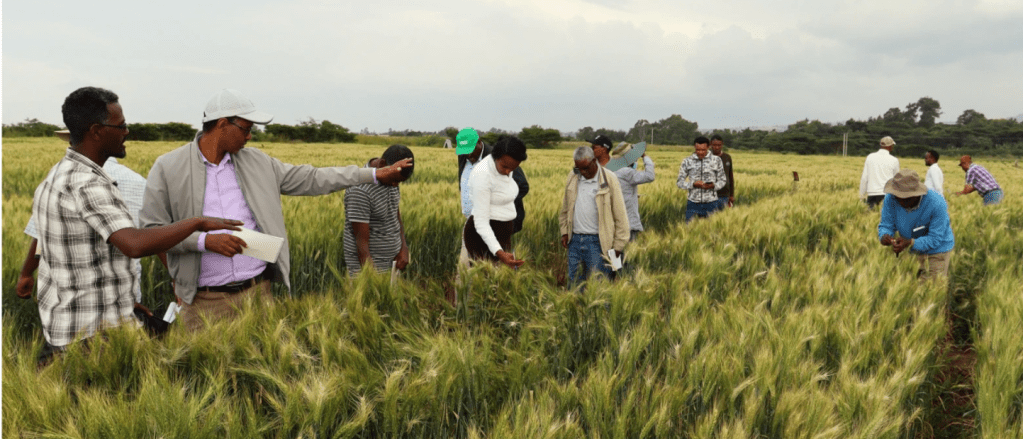
Food Systems Resilience Program for Ethiopia, Supporting Sustainable Agricultural Productivity programme of GIZ, and also those of ATI and AGRA.
We also assume that clarity and efficiency in regulatory procedures will be created as per the Seed Proclamation and its anticipated regulations, which, among other tasks, mandates EAA to conduct variety testing independently and impartially. This is important for trade and investment in the seed sector.
Leveraging trade and investment
One of the main factors inhibiting the proliferation of businesses in the seed sector in Ethiopia is the lack of finance. Established businesses have difficulties accessing loans and grants for further investing in seed production and marketing.
Though related to our efforts in strengthening the capacity of private sector, this area of activity is broader and includes a more political dimension – ensuring that government priority is given to encouraging private domestic and foreign direct investment in the seed sector. Collaborative governance and effective regulatory service provision create an enabling environment for trade and investment in the seed sector.
We expect to unlock € 20 m of investment by domestic businesses, international companies, and development partners.

You must be logged in to post a comment.